“Tying the Knot” in conjunction with Jinny’s Bakery and Tearooms is the continuation of an exploration of ideas around bread and traditional song supported by Leitrim County Council and Creative Ireland. This project explores how culture and creativity can connect communities. Through a series of collaborative events and workshops, we took a look at the common and contrasting traditions that are associated with weddings, from Irish culture as well as the various cultures that make up our local community.
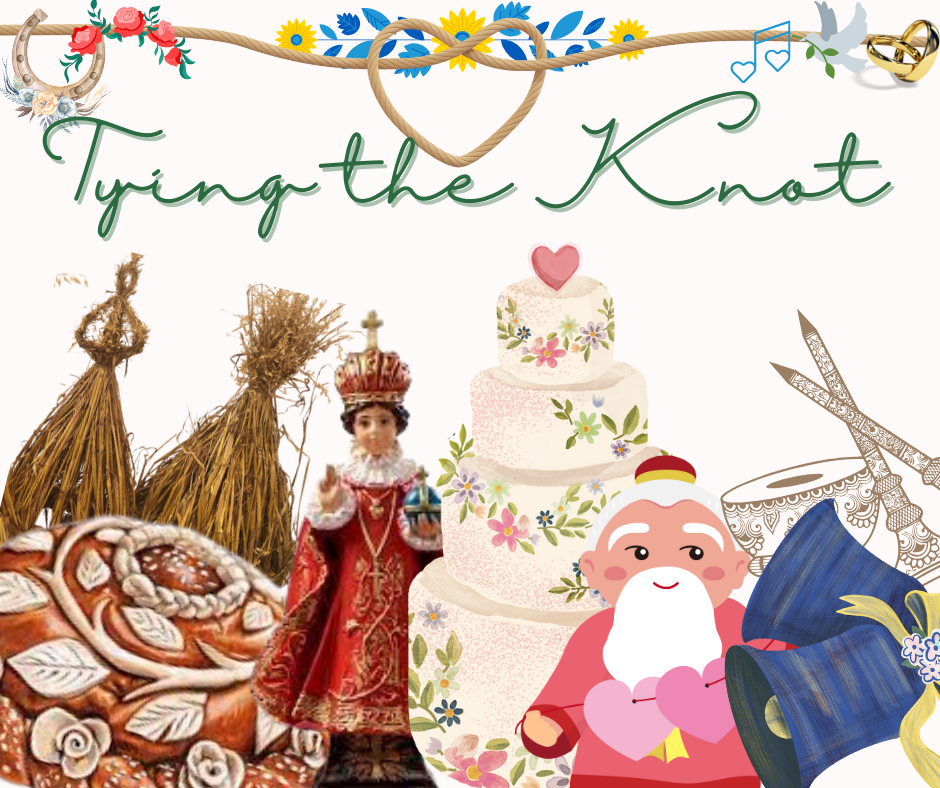
The Farmer wants a Wife
“A boy and a girl meet at a crossroads or country house dance. Crossroads dancing was very common about forty years ago. Every Sunday evening there was a crossroads dance. If someone knows of their being great he might go and tell their parents about them. If the old people liked the young pair to be married they got the match made. The boy sent two old, merry, married men to the girl’s house. Those men were always good funny talkers. Before they left for the girls house they were given a bottle of whiskey. The man who was intended to be married never went to the girl’s house before the match was made. The girl nearly always knows of their coming and she would be always sure to be away from home when the matchmakers would arrive. The men never come during the day but late at night when all the ramblers would be gone home and when all the people of the house would be thinking of going to bed. When the men would go in there would be great welcome for them if the people of the house knew their business and liked the marriage. The men and the girl’s father and mother would sit around the fire and begin talking of the good times and bad times they had. Then one of the men would tell their intention and start the match. The men praised the boy and the old pair praised their girl by telling the good woman the boy was getting and how hardworking she was. The men would ask the old man for a fortune. He would give his daughter a certain sum but the men would not be satisfied. After a long bit of funny talk the fortune question is settled. Then the men take out their bottle of whiskey and treat the old pair. They all drink the health of the young couple. Then there is a day fixed for the wedding and the match is made. The men go home to the boy then and tell him how they got on. Then there are another few rounds of whiskey. The boy and girl go to some big town and buy the wedding ring and wedding dresses and after that they are married.”
Informant: Patrick McTernan,
Cloonagh
Drumkeeran P.O.
Co. Leitrim – Dúchas Schools Collection
Songs
In song, it is generally the woman who is afraid of ending up “an old maid in the garret” despite having many talents:
“I can cook and I can sew; I can keep a house right tidy,
And rise up in the morning to get the breakfast ready;
There’s nothing in this wide world would make my heart so cheery,
As a wee fat man who would call me his own dearie.”
And the sentiment is somewhat similar in P.J. McCall’s “Haste to the Wedding”:
“I’d polished the pewter, I’d tidied the kitchen,
My dresser looked white as a stack in the snow;
And here by the window my skirt I was stitchin’,
For I’m very neat with a needle to sew.
Said I, “What’s the use o’ me mendin’ my finery,
Till it is fit for a queen on her throne?
For it’s oh dear! there isn’t the sign o’ me
Gettin’ a man and a place o’ my own.”
And although the male protagonists suffer in a lot of cases…
When first I came into this counterie
It was to view the sweet flowers gay,
I then fell courting a pretty fair maid,
She appeared to me like the Queen of May.
I asked her kindly would she marry
Or would she choose to be a sailor’s wife,
Oh, no, kind sir, I would rather tarry
And I would choose a sweet single life.
2. Oh fairest creature, the pride of nature
Why do you differ from all female kind,
For you are youthful and fair and handsome,
For to marry you I am much inclined.
Now kind sir since I must tell you,
I am promised these five years and more,
To one O’Reilly from the County Leitrim,
Which often grieves my poor heart full sore.
3. I wish I had you in Phoenix Island,
One hundred miles from your native home,
Or in some valley where none could find you,
You might incline then to be my own;
For there I would caress my jewel,
If along with me you’d consent to go,
I’ll sail you over to Pennsylvania,
And bid adieu to Reilly forevermore.
4. You have not me in Phoenix Island,
One hundred miles from my native home,
Or in a valley where none can find me,
So I’ll not incline then to be your own,
Therefore don’t tease me nor yet dispraise me
But along with you I’m not inclined to go,
So do sail over to where you came from,
For I’ll wait for Reilly forevermore.
5. You are like the swan that sails on the ocean
And making motions with both its wings,
Your snowy breast would be a potion,
For any Lord or an Irish King,
For you are youthful, fair and handsome
You are fitting to be a Queen,
I wish I was in battle wounded,
Before your beautiful face I’d seen.
6. In the morning when I cannot see you,
My heart lies bleeding for you all day,
For in the evening I can’t come near you
For them that’s bound they must obey.
Youth and folly makes young men marry
And here no longer can I stay,
What can’t be cured must be endured,
So farewell darling I must away.
(O’ Reilly from the County Leitrim)
As I was a-walking one fine summer’s morning,
The birds in the bushes did warble and sing,
Gay laddies and lasses, and couples were sporting,
Going down to the factory their work to begin.
I spied one amongst them more fairer than any,
Her cheeks like the red rose that none could excel,
Her skin like the lily that grows in yon valley,
And she was the hard working factory girl.
I stepped up beside her to view her more closely,
When on me she cast such a look of disdain.
“Oh, young man, have manners and do not come near me,
For although I’m a poor girl I think it no shame.”
“It’s not for to scorn you, fair maid I adore you,
But grant me one favour, say where do you dwell?”
“Kind Sir, you’ll excuse me, for now I must leave you,
For yonder’s the sound of my factory bell.”
“I have land I have houses, I adorned them with ivory,
I have gold in my pockets and silver as well,
And if you’ll come with me, it’s a lady I’ll make you,
And no more may you heed yon factory bell.”
With these words she turned and with that she had left me,
And all for her sake I’ll go wander away,
And in some deep valley, where no one shall know me,
I shall mourn for the sake of my factory girl.
(The Factory Girl)
…there was definitely more anxiety on the woman’s part as marriage was for most women, the only way they could survive financially.
Spinster
The “Marriage Bar” which was introduced in Ireland in the 1920s (and lasted up to 1973!) meant that once women married they were forced to resign from the workforce so they could “polish the pewter” and “tidy the kitchen” to their heart’s content.
And did you know…. “long before the word spinster was an epithet, it was a job title.
In the mid-14th century, unmarried women who were old enough to work were expected to keep themselves busy during the day. One common job that many women took was spinning fibers into thread, a repetitive but fairly simple job that occupied women’s time and gave them some spending money. Of course, after a woman was married, she no longer needed the job because her husband was expected to provide for her.
So you can see how the word spinster came to be associated with unmarried women. (For what it’s worth, men could be spinsters too, but it was considered “woman’s work.”)
But as technology advanced, innovations in mass production meant that thread spun by hand became less common. The spinster as a job position was slowly becoming obsolete; yet the word spinster hung around, associated with the unmarried women who used to do the job. That association was so strong that by the 17th century, spinster had even become an established legal term for an unmarried woman — completely divorced of its textile origins.”
(Saturday Evening Post – Andy Hollandbeck)
When Will we be Married?
Oh when will we be married my decent Irish lad
No sooner than tomorrow I think it will not be bad
Can we be married no sooner my decent Irish lad
Do you want to get married this moment
Auld woman I think you’re mad.
Who will we have at the wedding my decent Irish lad
If we have fathers and mothers I think it will not be bad
Can we have nobody better my decent Irish lad
Do you want a whole congregation
Auld woman I think you’re mad
What will we have at the dinner my decent Irish lad
If we have praties and toureen I think it will not be bad
Can we have nothing better my decent Irish lad
Do you want to have bullocks and heifers
Auld woman I think you’re mad.
What will we have to lie on my decent Irish lad
A pallet of straw in the corner I think it will not be bad
Can we have nothing better my decent Irish lad
Do you want to smother your husband
Auld woman I think you’re mad.
When will we have children my decent Irish lad
As soon as God allows it I think it will not be bad
Can we have them no sooner my decent Irish lad
Do you want to have them this moment
Auld woman I think you’re mad.
Traditional Ukrainian Wedding Songs
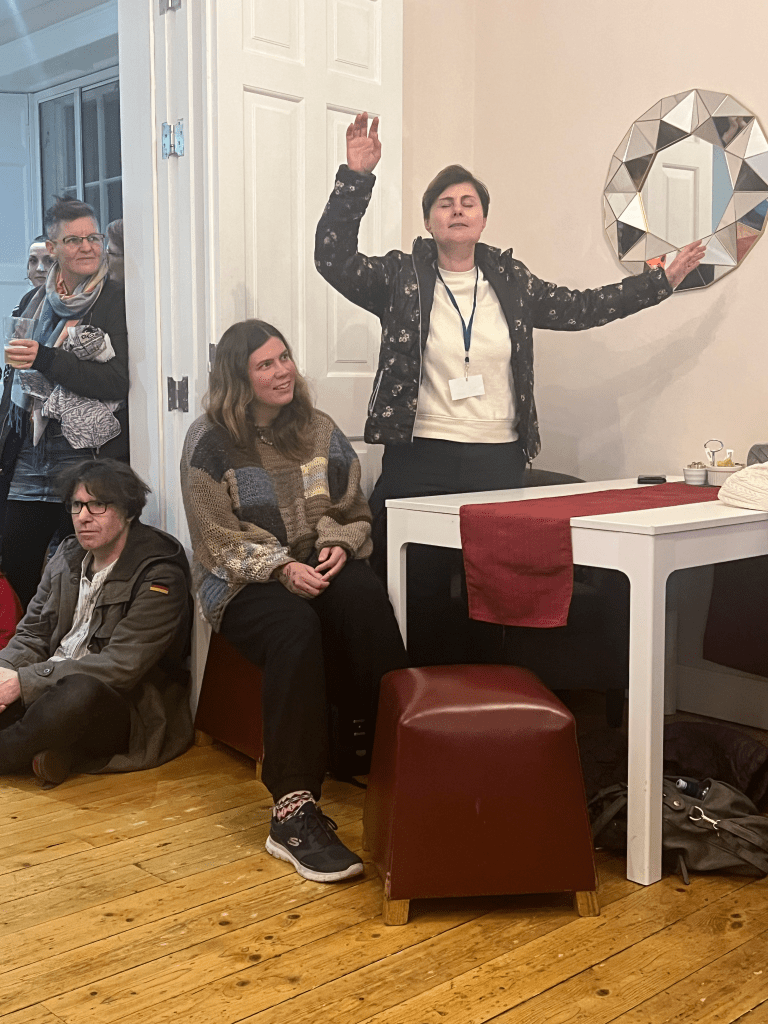
Traditionally, music and song played a big role in all aspects of a Ukrainian wedding, from courtship to the ceremony to the celebrations. Much of the Wedding ceremony music was traditionally sung by women. In a series of four workshops in conjunction with the Ukrainian community in Carrick-on-Shannon, we explored, exchanged and sang our traditional wedding songs whilst learning a bit more about each others’ cultures and traditions.
Oi u vyshnevomu sadu Oh, in a cherry garden
Tam soloveyko shchebetav, There was a nightingale twittering,
Dodomu ya prosylasia I was asking you to let me go home
A ty mene vse ne puskav. But you didn’t let me go for a long time.
Oi mylyi mii a ya tvoia, Oh, you’re my beloved lad and I’m your beloved
Ziishla vechirniaia zoria, There’s a night star came out already
Prosnetsia matinka moia, My mommy will awake
Bude pytat de bula ya. And will ask where I’ve been.
A ty skazhy takuiu rich: And you tell her such a story:
Yaka chudova maiska nich! What a wonderful May night it is!
Vesna ide, krasu nese, Spring is coming and bringing beauty,
A tii krasi radiie vse! And everything is welcoming this beauty!
Doniu moia, ne v tomu rich My daughter there’s no point saying
Yaka chudova maiska nich. How wonderful this May night is.
Chomu rozpletena kosa, Why is your braid untied
A na ochakh brynyt sloza? And there’s a tear in your eye?
Kosa moia rozpletena – My braid is untied –
Yii podruzhka rozplela. Because my friend-girl untied it.
A na ochakh brynyt sloza, And there’s a tear in my eye
Bo z mylym poproshchalas ya. Because I said goodbye to my beloved lad.
Mamo moia, vy vzhe stara, My mama, you are old already.
A ya krasyva y moloda, But I’m beautiful and young.
Ya zhyty khochu, ya liubliu! I want to live fully and I’m in love!
Mamo, ne lai doniu svoiu. Mama, don’t scold your daughter.
Throw Your Hat in the Ring
“In the district of the school long ago when a man went in search of a wife round Shraft what he used to do was throw in his hat and if the hat was lifted by those inside it was a sign that he was welcome to enter and state his business. When the hat was thrown back he could be going about his business he was not wanted there. One old man round here used to boast that when he threw in his hat it was kept and the girl who married him lifted it herself though some of the others wanted to throw it back as he was not considered substantial enough for the family he wanted to marry into.”
Cortober School, Co. Roscommon Teacher – Mary A. Burke
Dúchas Schools Collection
Pumpkin Rejection
“The Ukrainian Wedding process officially commences with the formal engagement. The prospective Groom, together with two older men (‘starosty’) visit the Bride’s parents house to request permission for their daughter’s hand. Tradition dictates that if the parents do not approve of the match they will send the young man home with a pumpkin so that he does not leave completely empty-handed.”
(Wedded Wonderland – Ukranian weddings)
Head First
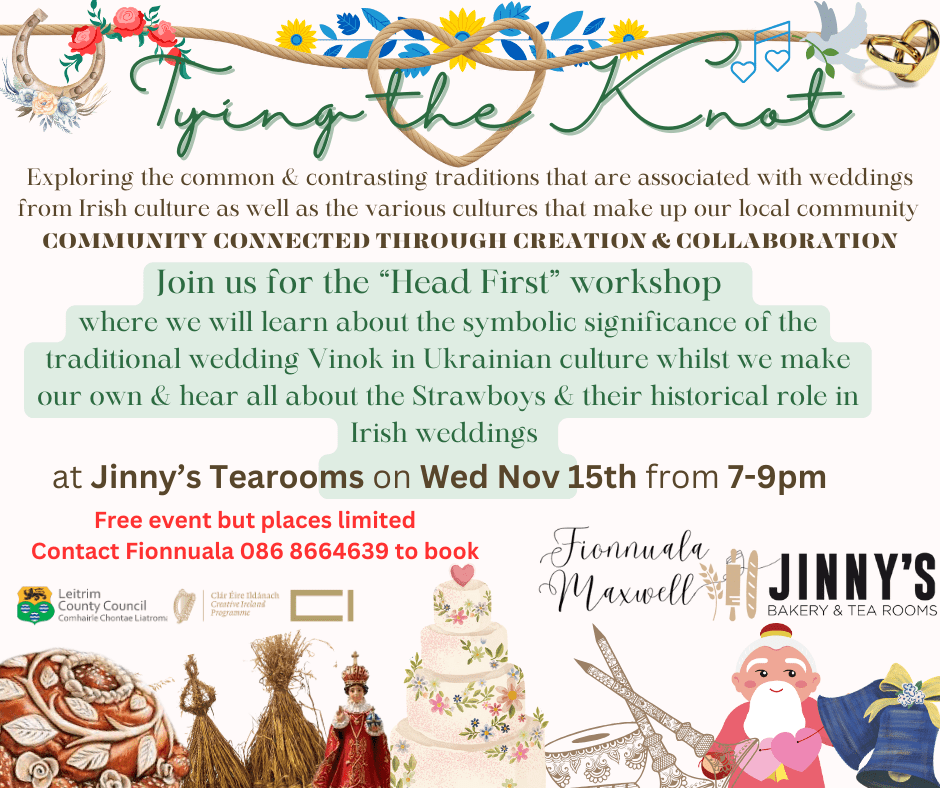
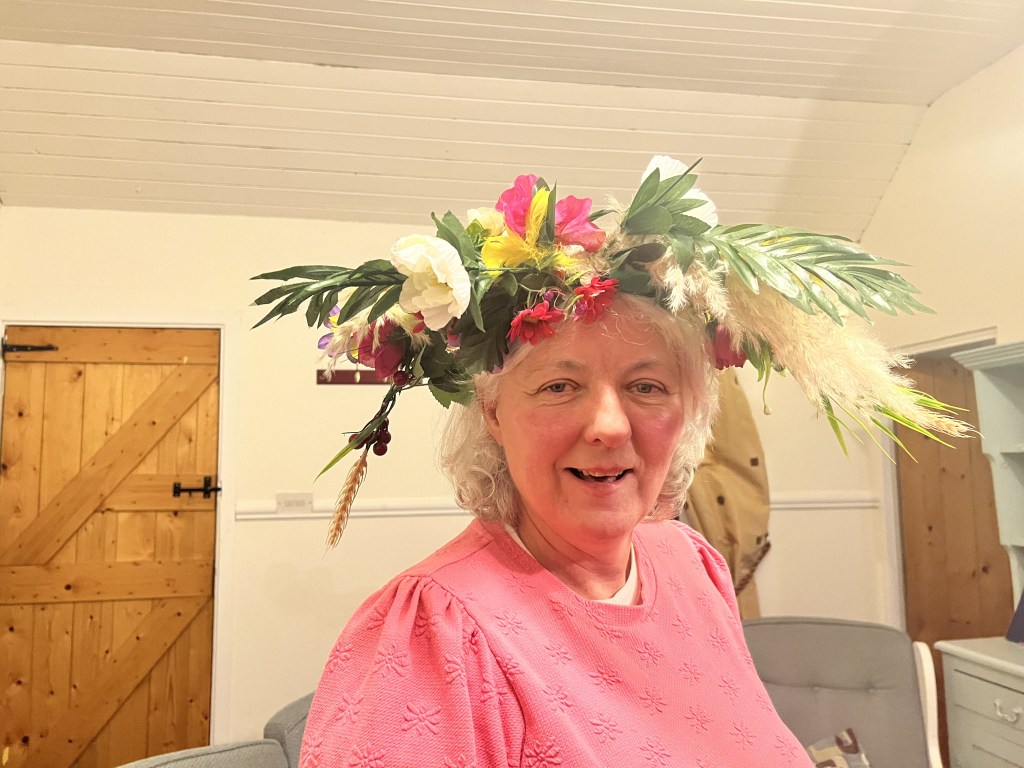
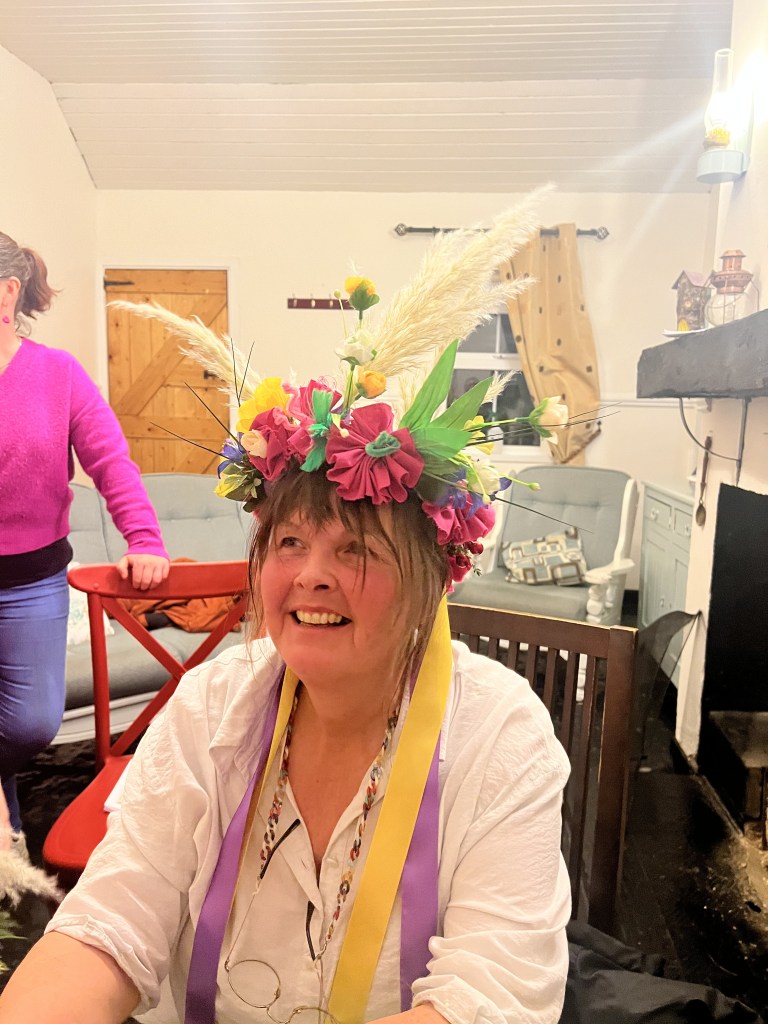
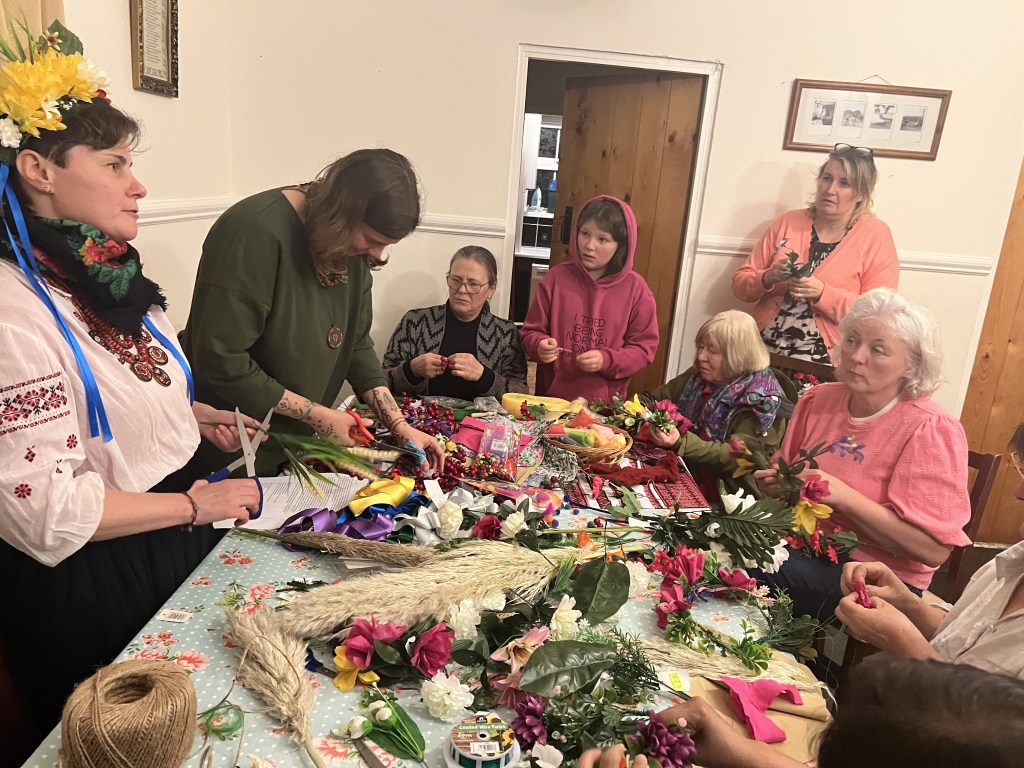
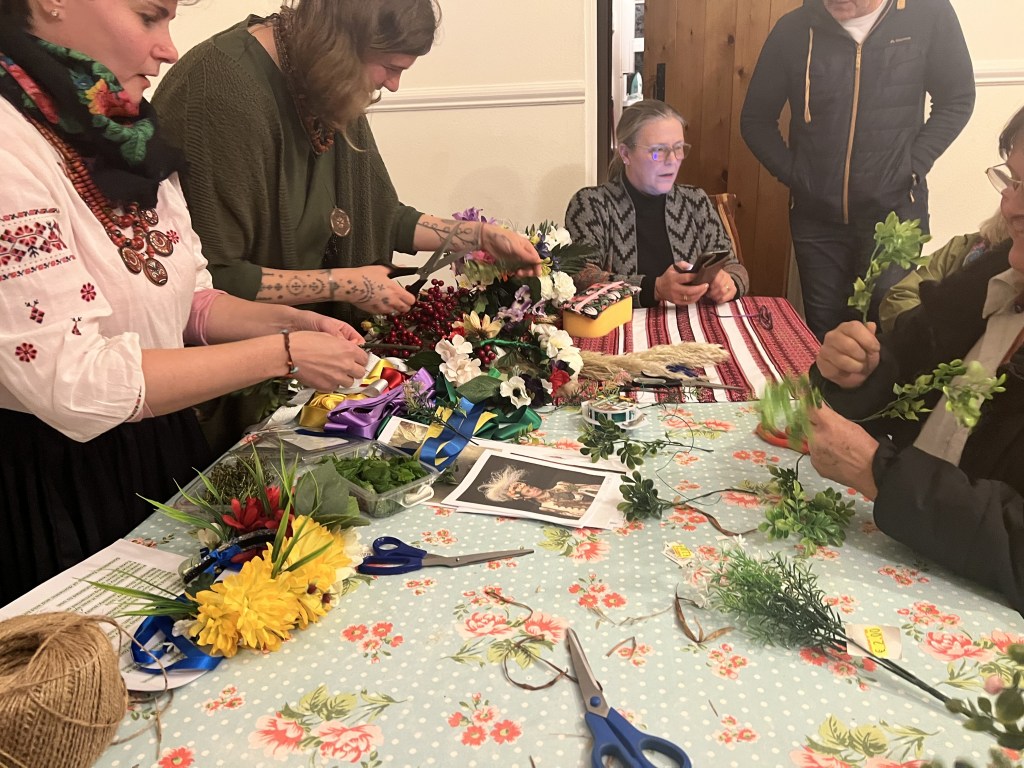
Our first workshop in this project was entitled “Head First” in which we explored the symbolic significance of the traditional Wedding Vinok as well as looking at the role of the Strawboys in Irish Wedding tradition. We made traditional Vinok together whilst Daria and Yuliia worked, sang and explained!

Strawboys
“Here are some of the marriage customs which existed about sixty years ago, as I heard them from my mother.
Marriages were generally made at fairs or markets at that time. If a farmer knew that a girl had a fortune he would ask her to be his bride. Fortunes which were given at that time were not greater than 100 pounds.
A wedding was a more important event long ago than it is now. It sometimes lasted five or six days. There were generally large crowds at a marriage. Side-cars were the vehicles that were used for driving the wedding party. A race was run from the chapel where the marriage ceremony was performed to the bride’s house on horse-back. A pass-word was given to the people who were to take part in the race and whoever reached the bird’s house first got a bottle of whiskey.
A dance was held in the bride’s house on the night of the wedding. A fiddler was payed to play music. Strawboys used to come to the house and sing songs or dance. They used to dress very peculiar. Large tall hats made out of straw were generally what they wore. Before they left the house they used to get whiskey. The bride did not go to her new home until about a week. The day on which she was brought was near by as important as the wedding day. This was called the “drag home”. The bride used to make a promise not to come back to her father’s house until a month has passed. The day on which she came back was generally on a Sunday. It was called Treat Sunday.
On the first Sunday after the marriage the groomsman and bridesmaid used to accompany the bride and groom to the chapel. They used to walk in state. The groom and bride went first while the groomsman and bridesmaid walked behind them. They used to occupy a seat in the chapel near the altar. The groomsman and groom sat in one seat and the bride and bridesmaid sat in the seat opposite them.
COLLECTOR: Annie M. Gallagher, Coolagraffy, Co. Sligo – Dúchas Schools Collection
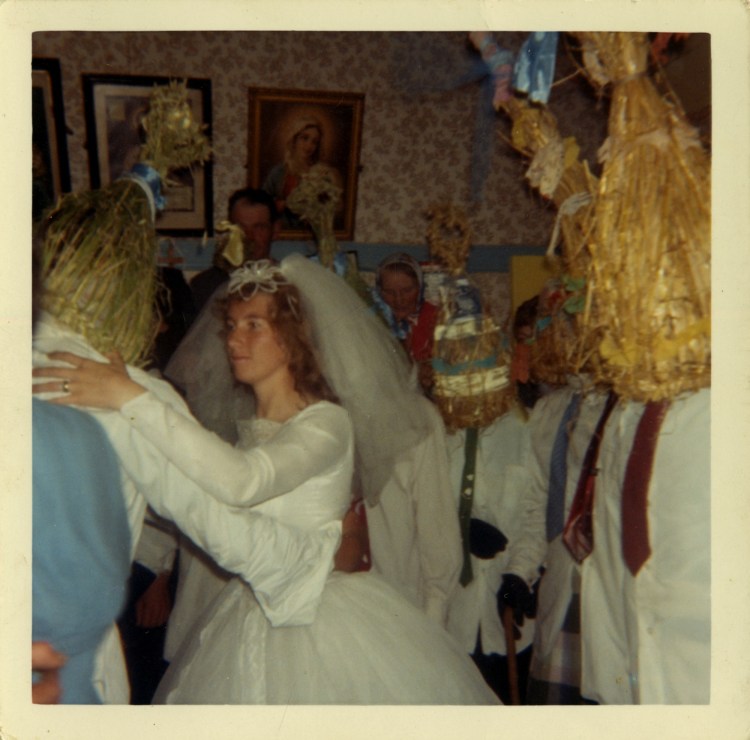
It was thought to be good luck if Strawboys called to the wedding party years ago. They danced with the bride and always received a good welcome.
For more info on strawing customs, how to make your own straw hat etc., check out https://www.sowingtheseedproject.com/
Pic: National Folklore Collection
Flowers
“Brides have carried a bridal bouquet in marriage ceremonies from as far back as ancient Greek and Roman times. Rather than bouquets of large, lavish blooms, which we often see in today’s weddings, in ancient times, it was customary to carry bouquets of herbs, spices, dill, and garlic to ward off evil spirits that wanted to disrupt the wedding and curse the bride and groom. Bouquets featuring your favorite flowers didn’t become a trend until Queen Victoria walked down the aisle with a bouquet of snowdrops, her favorite bloom. ” Griffins Floral Designs
“Back in the “Good Old Days” most people got married in June because they took their yearly bath in May and they still smelled pretty good by June… However, brides carried a bouquet of flowers to hide the body odor. Hence the custom today of carrying a bouquet when getting married.
Flowers have always been an important aspect of weddings. In Ireland the bride often wore a wreath of wildflowers in her hair . If the bride carried a bouquet she almost always put wildflowers in it. A sprig of shamrock was also considered good luck to be tucked in the bouquet.”
(Irish Eyes VA)
Mexican Wedding Bouquets
It is common for Mexican brides to have two flower bouquets – one for the bride, of course, and another that they present to the Virgin of Guadalupe (Virgin Mary)

Noemi McGlade Hernandéz, who is from Mexico but has been part of the Carrick-on-Shannon community for many years, kindly shared some memories of her own wedding day as well as other elements of a more traditional Mexican wedding. One of the most unique features of a Mexican wedding is the music – the mariachi bands ensure that everyone dances the night away!
Los Padrinos y Madrinas
The “Los Padrinos y Madrinas”, or Godparents/sponsors, play a significant role in traditional Mexican weddings.
“Mexican couples select mentors who are with them throughout engagement and marriage. The Padrinos can be grandparents, godparents or friends. There are two types of sponsors. Mentors who chosen by the couple and sponsors who volunteer a gift to the couple.
Mentors are role models who are successfully married that the couple admires. These padrinos or mentors take part in the Catholic Church services as guests of honor. Padrinos provide financial support to help with the wedding costs.
This type of sponsorship comes from well nurtured relationships between the Mexican people. Sponsors contribute to the wedding like the lazos, arras, flowers, lucky gold coins, etc.”
(Eivans photography & Video)
El Lazo – Tying the Knot
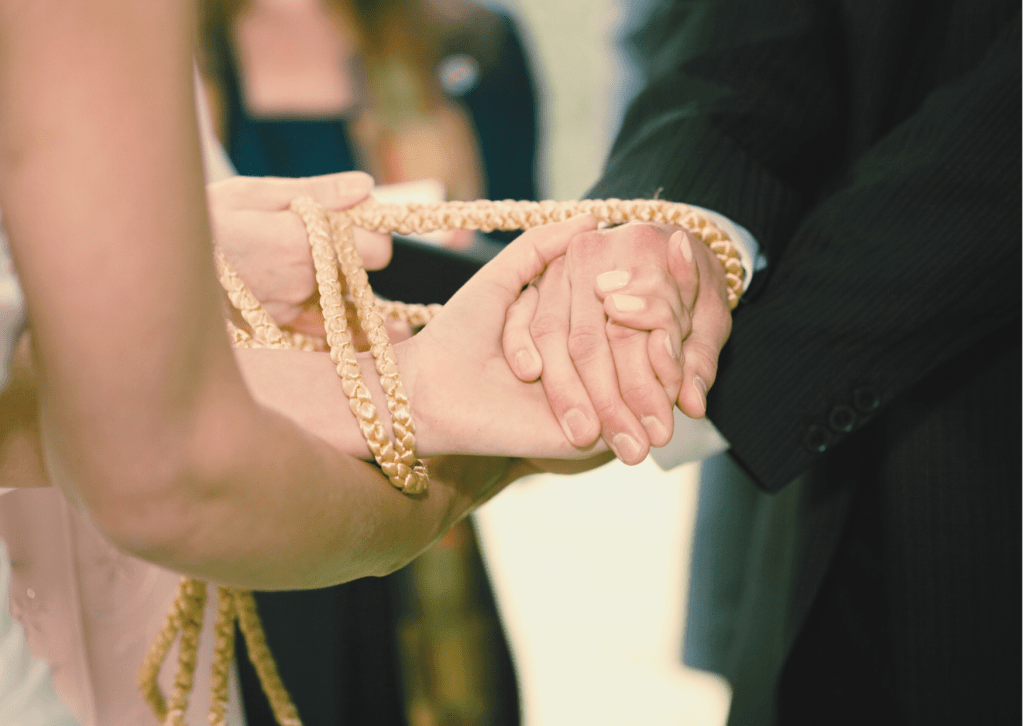
“Within the Catholic Church, the wedding lasso tradition is a unity ceremony in which the couple is joined together by a lasso, rope, rosary or cord. While the lasso tradition is steeped in ancient Catholic faith, Christian and even nonreligious couples in Spain and Latin America also choose to incorporate it into their wedding because of its symbolism.”
(theknot.com)
“Handfasting is an ancient Celtic tradition that dates back to 7000 B.C. Traditionally, when two people were brought to be married, a cord or piece of material was used to bind the couple’s hands together during the ceremony. This symbolised the joining of two lives and is where the expression ‘tying the knot’ comes from. Ancient Celtic law would see this union as a trial period that lasted for one year and one day which would ensure the couple was ready for the commitment of marriage. It was also seen as a public declaration of intent to marry which would let any potential suitors know that both parties were ‘off the market’.”
(McGregor and McDuff)
St. Valentine or St. Anthony?
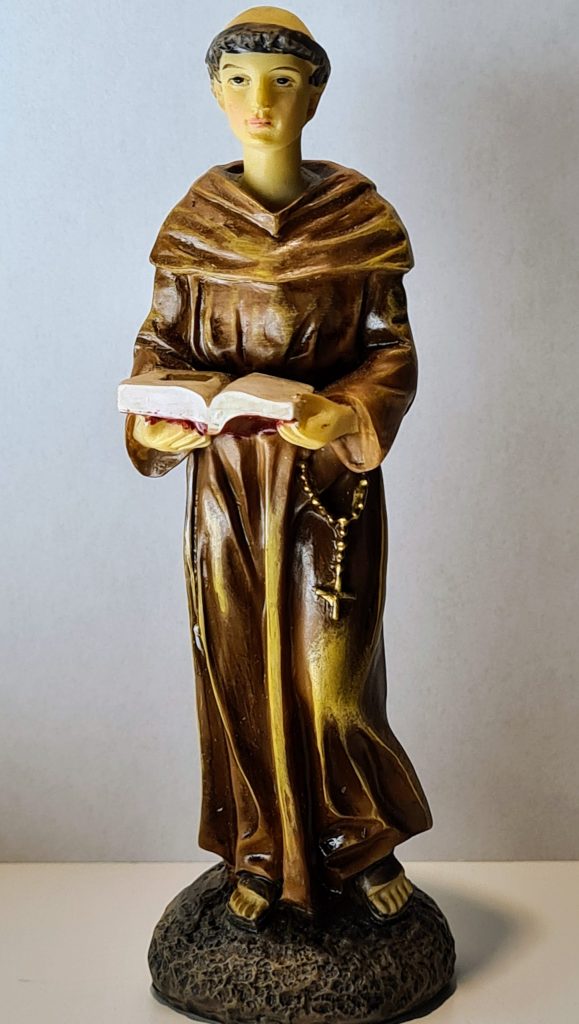
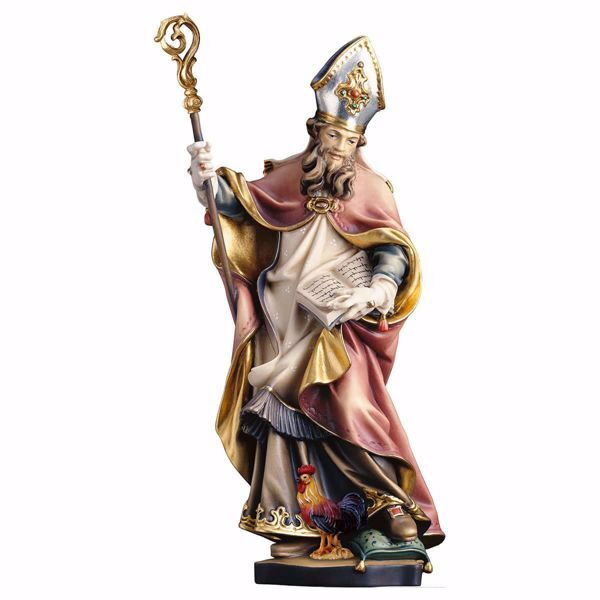
Whilst many Irish Catholics will pray to St. Anthony if they misplace something, in Mexico, Spain and other Caribbean traditions, St. Anthony is known as the “saint of love”…
“In Mexico , turning St. Anthony of Padua upside down or offering him 13 coins are common rituals to find love , even when the Catholic church is against these type of rituals….
The tradition is so popular in Mexico that a restaurant with a thematic St. Anthony of Padua room opened in Morelia , in the state of Michoacán in 1996, becoming a hotspot for women and men who are looking for love . The room is called the “ Corner of the Spinsters ,” it has around 850 images of the Saint, and it’s been visited by thousands of people.”
(El Universal)
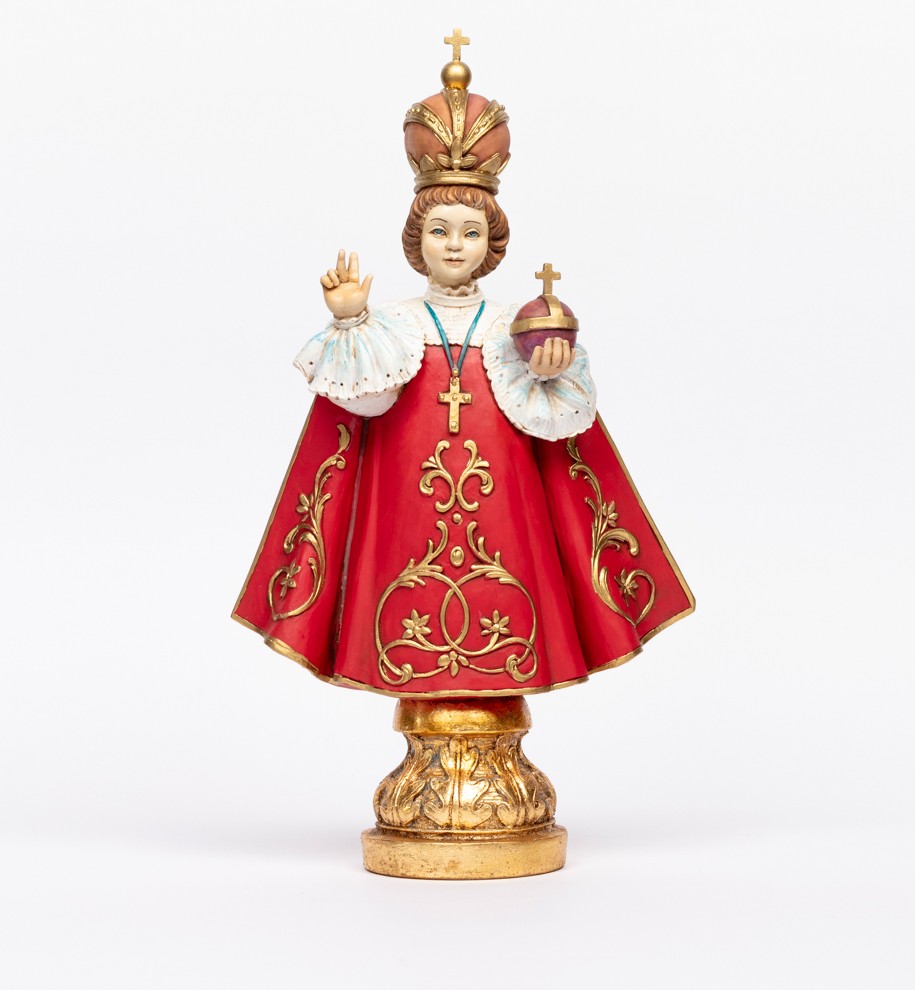
And why does a statue of the infant Jesus that originated in the Czech Republic have such meteorological powers in Ireland, particularly when it comes to weddings?
“While the idea of placing a gilded baby in your back garden might seem entirely random, it’s only natural that this little guy has become synonymous with Irish weddings, as the very first Child of Prague statue was given as a wedding present. A famous Spanish noblewoman named María Manriquez received the statue of the infant Jesus from her mother when she married Czech nobleman Vratislav of Pernstyn in 1556. The statue is now on display in a church in Prague, where it’s said to have performed miracles. At some point in the past 462 years, an enterprising person started producing copies, and an Irish pilgrim must have brought one home, kickstarting a delightful, if unusual craze.”
(One Fab Day)
“In short, according to Irish wedding tradition, the Child of Prague is meant to bring the promise good weather on your wedding day.
But, this little guy has some pretty specific (yet also very unclear) requirements to ensure the good weather. The requirements to ensure good weather vary depending on which relative you talk to, or website you Google.
One camp says that the night before the Big Day, a Child of Prague statue should be placed outside your house, under a hedge or in a flower bed will bring good weather on your wedding day. Whilst others say that the Child of Prague should be buried up to its shoulders under said hedge.
Ideally when you return to the Child of Prague, it’s head will somehow be separated from the body – and voila, an omen good weather on your wedding day!”
(weddingseason.ie)
Breaking Bread

“The sharing of the bread, salt and wine is an old Polish tradition. At the wedding reception, the parents of the bride and groom, greet the newly married couple with bread, which is lightly sprinkled with salt and a goblet of wine.
With the bread, the parents are hoping that their children will never hunger or be in need. With the salt, they are reminding the couple that their life may be difficult at times, and they must learn to cope with life’s struggles. With the wine, they are hoping that the couple will never thirst and wish that they have a life of good health, and good cheer and share the company of many good friends.
The parents then kiss the newly married couple as a sign of welcome, unity and love.”
(polishamericancenter.org)
Bread and salt is a tradition in many countries – not just for weddings but also as a welcoming gift when people have moved into a new home. Of course, bread has always been seen as a staple food and the symbolic idea of “breaking bread” with others suggests a sharing and welcoming.
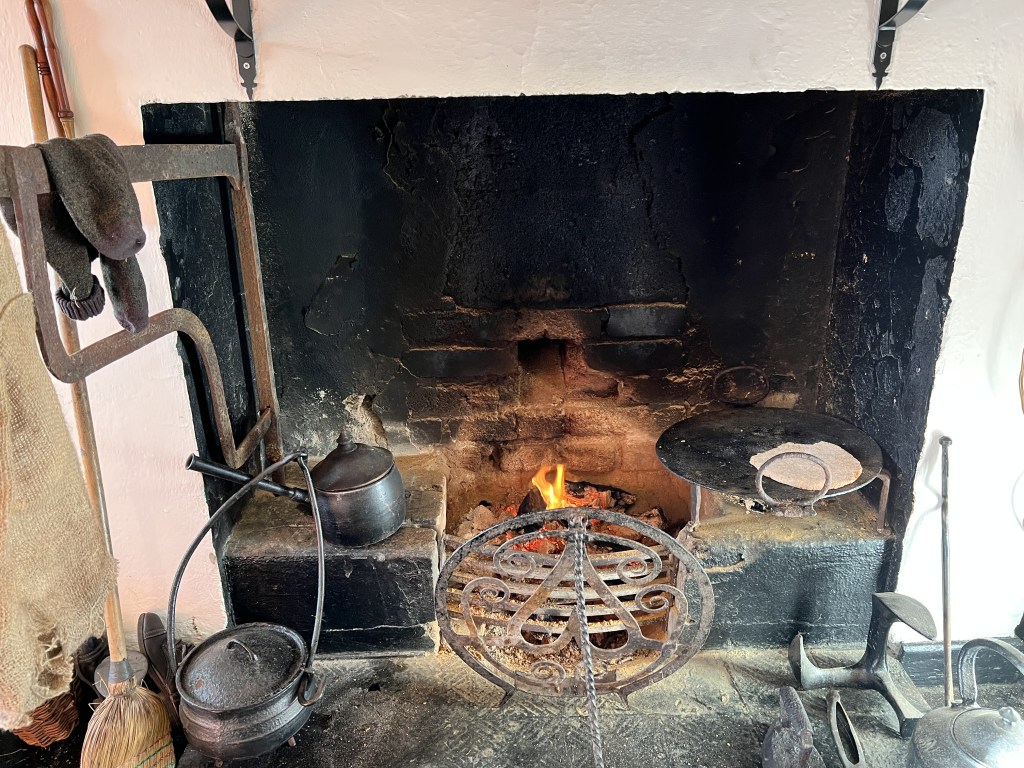
In Irish wedding tradition, a different breaking of bread took place…
“About fifty years ago it was customary when the bride returned from church to the house where the reception was given, for the oldest married lady among the guests to break a “bonnac” of oaten bread over the bride’s head and small pieces of this were put through the ring by the bride and given to the unmarried ladies and gentlemen at the banquet who slept on it the following night and were supposed to see their future husbands or wives as the case might have been…”
An tSr. Mícheal le Muire, Mohill, Co. Leitrim – Dúchas Schools Collection
“Marriages take place most frequently in Shrove. People get married on Shrove Tuesday. Wednesday and Friday are counted very unlucky days to get married on. The month of Mary is an unlucky month to get married in.
Matches are made in this district. First of all the man that intends to marry the young girl gets a friend to go with him to the house of the young girl to ask her parents’ consent. If they consent they will appoint some night to meet at the young mans house and they will make the match and they will appoint the day for the marriage. The day of the wedding a great feast is made. It was an old custom when the bride would come in after marriage some near friend would be waiting at the door to break a cake of bread on her head so that she might always have plenty of bread.
Strawboys attend the marriages.”
Collector: Maighread Ní Threasaigh, Cloonlaughan, Co. Roscommon
Informant: T Treacy aged 56. Dúchas Schools Collection
Korovai
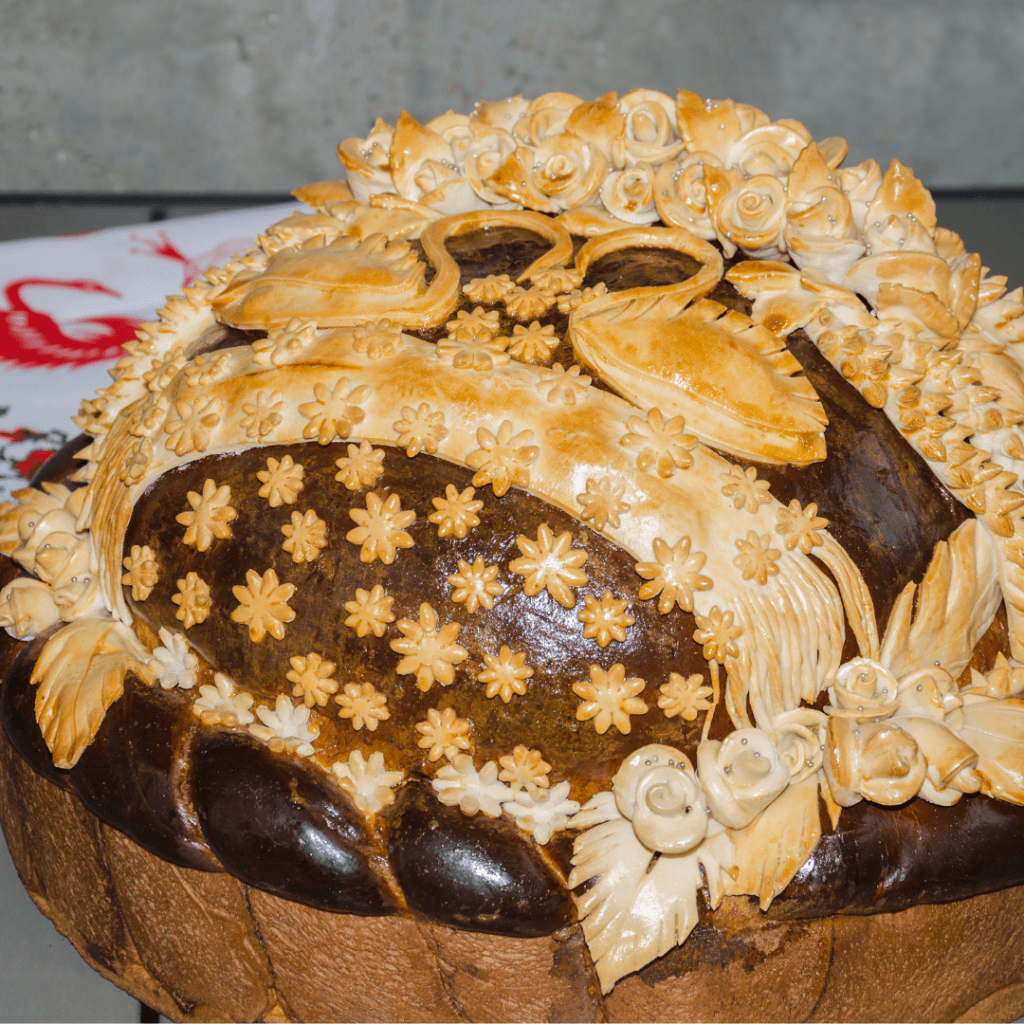
“Korovai, or wedding bread, symbolizes an entire Ukrainian community’s blessings for a couple’s wedding. And it should, because it takes almost a village to make it.
In a ritual that begins on the Saturday preceding the ceremony, seven women gather to knead dough and sing folkloric wedding songs. These bakers are said to pass on the fate of their own marriages through the bread, so only women who are living happily in their first marriage are allowed the honor. After they’re done, a happily married man must place the bread into the oven. Then everyone prays for the best. A cracked or malformed korovai is a bad sign for the marriage, but the higher it rises and the more decorations or layers it contains, the better the marriage will be.”
(atlasobscura)
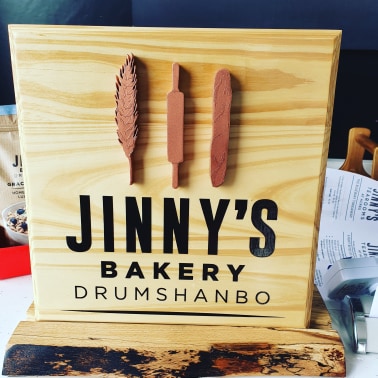
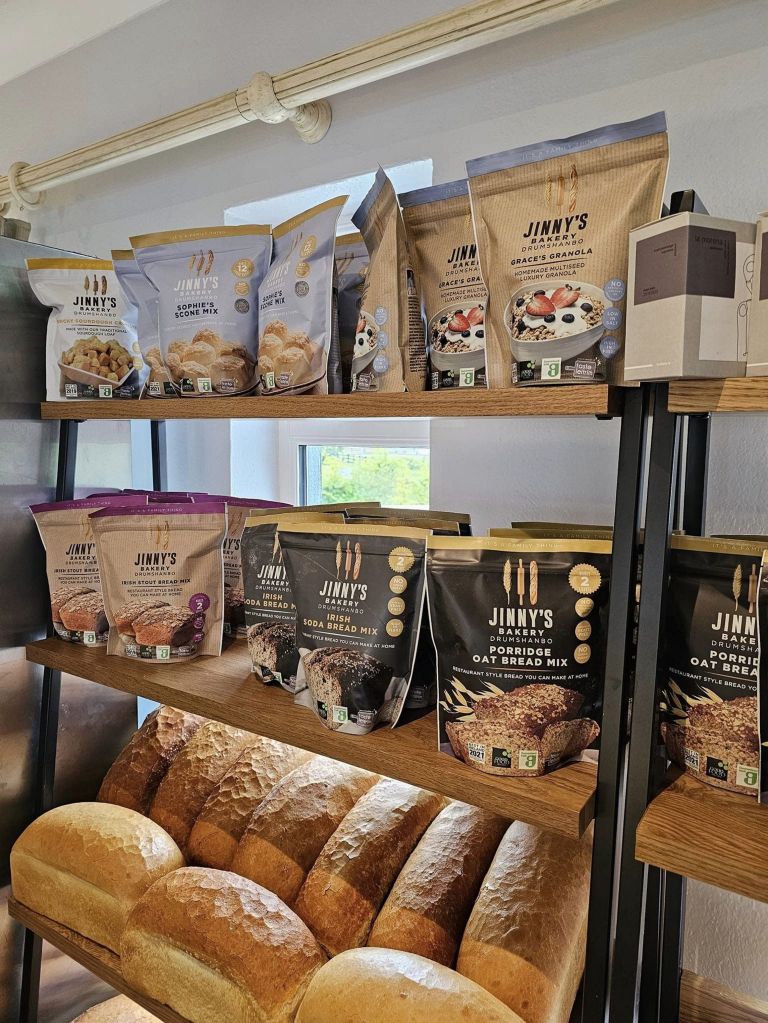
For yummy breads, cakes, meals or a place to stay and explore all that lovely Leitrim has to offer, check out Jinny’s Bakery and Tea Rooms in Drumshanbo or find their range of goods in many local supermarkets.
With thanks to Pascal and Sinead Gillard and family, The Ukrainian Community in Carrick-on-Shannon, Carrick Tidy Towns, Leitrim International Community Group and all who contributed to or participated in the project in any way.

 Fionnuala Maxwell