A collection of Traditional & Sean nós Songs suitable for Fleadh Cheoil. Recordings, lyrics and background notes for those exploring traditional and sean-nós singing.
Welcome
Traditional and sean-nós singing are among the richest parts of Ireland’s musical heritage. For generations, songs were learned by listening — passed from voice to voice at home, in the fields, at gatherings, and around the fireside.
Today many people feel drawn to these songs but are unsure where to begin. Unlike instrumental music, the pathways into singing are not always obvious. Finding suitable songs, reliable lyrics, good recordings, or an understanding of style can sometimes feel difficult.
This collection brings together a small selection of songs shared by experienced traditional singers. Each song is accompanied by recordings, lyrics and notes to help singers learn the song and understand something of its background.
The versions presented here are offered as guides rather than fixed models. Traditional singing has always welcomed variation and personal interpretation. The hope is that these recordings will help singers listen deeply, build confidence and gradually find their own voice within the tradition.
Traditional & Sean Nós Singing at the Fleadh
Traditional and sean-nós singing competitions at Fleadh Cheoil na hÉireann celebrate song as a living tradition. The emphasis is not on vocal power or polished performance, but on storytelling, musical understanding, clarity of words and respect for style. The competition titles differentiate between Irish ballads sung in the English language (traditional singing) and those sung in the Irish language. (sean nós)
Songs are sung unaccompanied and from memory. Singers must present both a slow song and a lively song, chosen from the traditional repertoire.
Judges listen for:
• clarity of words and storytelling
• understanding of the song
• natural ornamentation and phrasing
• musicality and interpretation
• respect for traditional style
At its heart, Fleadh singing is about sharing a song with honesty and character. Each singer brings their own voice, personality and experience to the tradition.
Explore the Songs
The songs gathered here range from slow expressive sean-nós verses to lively traditional songs in both Irish and English. Some are widely known within the tradition while others are less commonly heard.
Each song includes:
• a recording by the singer
• lyrics
• background notes about the song
• downloadable PDF of lyrics
These recordings are intended as learning tools — encouraging listening, curiosity and respect for the tradition.
Singer Contributions

Edel Vaughan
Edel Vaughan, a native of County Clare, has been immersed in traditional music and song from a young age. A six-time All-Ireland winner in traditional singing, she has travelled widely, performing and teaching and is known for her expressive and deeply rooted sean-nós style.
An Raibh Tú ag an gCarraig
Style: Sean-nós, slow
About the song:
A powerful song associated with the Mass Rock tradition. Versions of the song were collected by Séamus Ennis from Máirtín Mac Con Mara of Crusheen, County Clare.
Lyrics
An Raibh tú ag an gCarraig
An raibh tú ag an gCarraig, nó a’ bhfaca tú féin mo ghrá
A’ bhfaca tú gile nó finne nó scéimh na mná?
A’ bhfaca tú an t-úll is cumhra ‘sba mhílse bláth?
Nó an bhfaca tú mo Valentine , nó an bhfuil sí dá chloígh mar atáim.
Bhí mé ag an gcarraig, is chonaic mé féin do ghrá.
Chonaic mé gile is finne is scéimh na mná
Is a chonaic me an t-úll, ba chumhra ‘sba mhílse bláth.
Is chonaic mé do Valentine, is níl sí dá chloígh mar atáim.
Is fiú cúig ghiní ríbe dá gruaig mar an ór,
Agus is fiú a chéad oiread do chuideachta dhá uair gach ló;
A cúilín trom triopallach ag titim go sála bróg-
Faoi thuairim sláinte an bhruinnill is níor mhiste liom do shláinte ól.
Is siúd í thíos í, an rí-bhean álainn óg,
Go bhfuil a gruaig léithe síos go híochtar béal a bróg;
Is í an eala ar an dtoinn í a shíolraigh ón ardfhuil mhór;
O! a charaid gheal mo chroí thú agus céad mile fáilte romhat.
Background notes
An choitianta ar ndóigh, ach is rí spéisiúil gurbh é an leagan seo a bhí ag Seamus Ennis agus nach bhfuil aon chinnteacht ann cé a chum.
Dúirt sé gur ó Mháirtín Mac Con Mara, ó Chroisín (m’ait chónaithe) a fuair sé an leagan a bhí aige den amhrán. Tá Carraig Aifrinn idir m’áit dhúchais I bParóiste Inse Cronáin agus an Tulach, ‘Carraig Bhlárna’ a dtugtar air.
Nuair a bhí na Péindlíthe ar siúl in Éirinn, ní raibh sé ceadaithe dul ar an Aifreann, mar sin bhí sé de nós bualadh ag an gCarraig Aifrinn. Ba rún nó cód é an t-amhrán seo, mar sin, do mhuintir na háite.
Cáit i nGharrán a’ Bhile
Style: Sean-nós, lively
About the song: A lively song associated with Edward Lysaght of Co. Clare, celebrating Cáit from Garrán a’ Bhile, “the grove of the sacred tree.”
Lyrics
Cáit i nGharrán a Bhile
Cúrfa
An raibh tú riamh I nGarrán a Bhile?
Nó an bhfaca tú í I nGarrán a Bhile?
An tsuairc-bhean óg na gcuacha óir?
‘Sí Cáit mo stóir I nGarrán a Bhile.
Is gile í ná eala ar linn
Sna sneachta ar bharr na craoibhe cuilinn
‘S milse a póg ná drúcht na rós
‘Sí Cáit mo stór I nGarrán a Bhile. (Cúrfa)
Cúrfa
Is binne a ceol ná lon ‘sa smól
A’s na filiméala ar chraoibhe na saile
Mar loing faoi sheol ar thoinn gan cheó
Sea chimes mo stór I nGarrán a Bhile (Cúrfa)
Cúrfa
Chughatsa a Chríost, le fonn mo ghuí
Má tá aon bhrí le guí an bhfile
Gan cáin, gan chíos, gan phráinn gan dhíth
Go raibh Cáit is a budhin I nGarrán a Bhile.
Cúrfa
Background notes
Scríobh Edward Lysaght as Co. an Chláir an t-amhrán seo. (1763-1809)
Rugadh Lysaght I gCreatlach I gContae an Chláir i 1763 agus fuair sé a chuid oideachais I scoil ‘Doctor Hare’ I gCaiseal agus I gColáiste na Trionóide agus Oxford ina dhiaidh sin.
For those wondering what a ‘bile ‘ might be, it is a great or a sacred tree and Cáit from Garrán a’Bhile/Kate from the Grove of the Sacred tree, would grow up to be one of the belles of Tipperary
An Páistín Fionn
Style: Sean-nós, lively
About the song: A widely known Munster song, long popular in Irish-speaking areas and summer schools, and remembered by Micho Russell as part of an older singing tradition.
Lyrics
An Páistín Fionn:
Grá lem’ anam mo pháistín fionn
A bhfuil a croí is a haigne ag gáire liom
A cíocha geala mar bláth na gcrann
Is a píob mar eala lá Márta
Cúrfa:
Is tusa mo rún, mo rún, mo rún
Is tusa mo rún is mo ghrá geal
Is tusa mo rún is mo chumann go buan
‘Sé mo chreach gan tú agam ó do mháithrín
Cara mo chroí, mo pháistín fionn
A bhfuil a dá grua ar lasadh mar bhláth na dtom
Tá mise saor ar mo pháistín fionn
Ach amháin gur d’ólas a sláinte
Cúrfa
Dá mbéinnse sa bhaile ina bhfuil súgradh is greann
Nó idir dhá bhairille lán de leann
Mo stóirín i’m aice is mo lámh faoi’n a ceann
Nach súgach a d’ólfainn a sláinte
Cúrfa
Chaith mé naoí n-oiche ag luí go bocht
Sínte faoí dhíleann idir dhá thor
A chumann mo chroí, is mé ag smaoineamh ort
Is ná faighinnse le fead ná le glaoch thu
Cúrfa
Tréigfead mo mhuintir is mo cháirde gaoil
Tréigfead a mhaireann de mhnáibh an tsaoil
Ach ní thréigfead lem’ mharthain thu, a stór mo chroí
Go síntear i gcómhra faoí chlár mé
Cúrfa
Background notes
Amhrán na Mumhan. Very popular in the Gaeltacht Summer schools. Carrigaholt summer school in Clare included.
Micho Russell mentioned that his own native Irish speaking parents had this song and Micho himself used to play it on the whistle. Ní fios cad as don amhrán, An Páistín Fionn, ach go mba amhrán fíor-choitianta é ar fud Iarthar agus Deisceart na hÉireann. Bhíodh an t-amhrán á mhúineadh sna scoileanna náisiúnta.
Mairéad Ní Fhlatharta
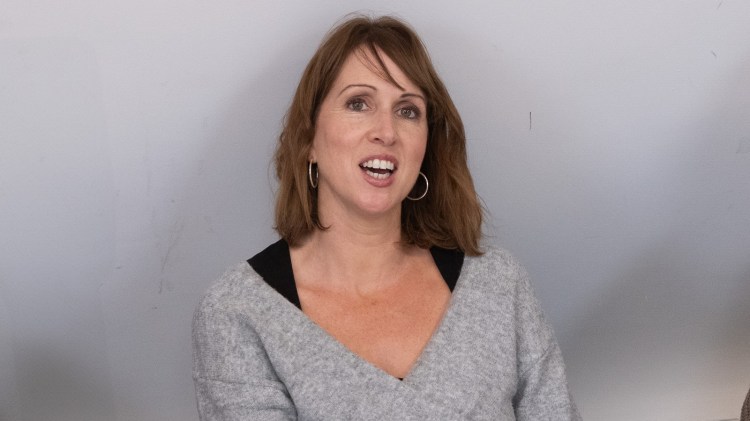
From Baile an tSléibhe, An Spidéal, Mairéad has been singing since she began attending classes at An Gaelacadamh at the age of seven. Mairead speaks of the formative influence her teachers had on her, including the late Pat Phádraic Tom Ó Conghaile and Peatsaí Ó Ceannabháin. With their encouragement, she has also incorporated elements of the singing of Seosamh Ó hÉanaí and Darach Ó Catháin into her own distinctive style, and mentions Dara Bán and Caitlín Maude as seminal influences on her approach to sean-nós songs. Photo: Sean O Mainnin
An Abhainn Mhór
Style: Sean-nós, slow
About the song: A traditional Irish language song of farewell from Connemara
Lyrics
An Abhainn Mhór (Mall)
Tá mo mháithrín go tréan lag
agus tá sí aonraic ar Chaladh na mBád.
Bíonn sí ag osnaíl is ag éagaoin
chuile oíche Domhnaigh go mbíonn sé ina lá.
Tá a comrádaí sínte i gCill Bhríde
is tá leac ar a cheann.
Is tá a mac ina cheann siamsa
ar fud na tíre agus jug ina lámh.
Is nach bhfuil grá do dháréag agam
is tá siad aonraic ar aon tsloinne amháin.
Ach tá bean óg ar an méid sin,
ní fhéadfaidh mé a hainm a rá,
Go n-athraí Loch Éirne
s go dtréige an eala a clúmhach bán.
Ní inseoidh mé go héag daoibh
cén réasún le go dtug mé di grá.
Nach bhfuil grá do chailín óg agam
is deir go leor liom nach mairfidh sí mí,
Nuair a théimse go teach an ósta,
níl spórt ann is deise ná í,
Tá a grua mar an rósa
is tá sí ag doirteadh na meala ar chaon taobh,
Is an té a bhlaisfeadh dá póigín is é mo thuairim
go mbeadh fad ar a shaol.
Ach chúns a bheas mé beo in Éirinn
ní dhéanfaidh mé ciste ná stór,
Chúns a bheas mé beo in Éirinn
ní thréigfidh mé comhluadar óg,
Chúns a bheas mé beo in Éirinn
nach bpléascfaidh mé an jug ar an mbord,
Le do shláintese, a mhíle stóirín,
‘s é an trua nach liom do dhá bhó.
Dar mo mhionna agus mo mhóide,
is dar leabhar mór a bhfuil mé ag dul tríd,
I gcomhluadar ban óg
go deo deo ní ghabhfaidh mé arís,
Mar is leo a chaith mé mo bhróga
ó thús m’óige go dtí deireadh mo shaoil
Is nár fhágadar i mo sheó mé
ag cur tuairisc cá gcodlóinn an oíche.
Ach murach m’óige is mo dhícéille
nach lách éasca mar a chaithfinn mo shaol
Nuair a chuaigh mé thar sáile le Máirín
ar uair an mheán oíche
Agus bhuail mé faoi na Búrcaigh,
dream a diúltaíodh as flaithis na naomh
Is nár fhágadar faoi bhrón mé
is tá ag gabháil orm amach go Trá Lí
Nach bhfuil mo chóta mór stróicthe
ó ghlúin is tá sé ag sileadh liom síos,
Ach an té a chuirfeadh caoi is cóir air
céad faraor tá sé i bhfad ó mo shlinn.
An tailliúr glan cóir ar an Aird Mhóir
mar atá Tomáisín Bán
Is nach gcuirfeadh sé píosa air
is green velvet aniar trína lár.
Mo mhíle slán leat, a Abhainn Mhóir bhoicht,
is é mo thrua gan mé anocht le do thaobh
Mar is iomaí sin bóithrín caol uaigneach atá ag
dul idir mé is tú
Nach ann a bhíodh an spórt againn chuile oíche
Domhnaigh ag cur gaisce ina shuí
Is nach mbíodh jug ar an mbord ann is bhíodh
mo stóirín fial fairsing dá roinnt
Ceardlann sean-nóis le Mairéad Ní Fhlatharta
Amhránaí Cónaitheach, Ollscoil na Gaillimhe 2024
Translation into English
My mother is weak and alone in Caladh na mBád. She sighs and moans each Sunday night until dawn breaks. Her companion has been laid in Cill Bhríde and there is a tombstone over his head. Her son is a rake throughout the land with a jug in his hand.
I give my affection to twelve who are all of the same surname. There is a young woman among them whose name I cannot mention. Until Loch Éirne changes and the swan has down other than white, I will not tell you the reason I love her as long as I live.
I love a certain young girl and they tell me she will not live a month. When I go to the pub there is no nicer sport than she. Her cheeks are like roses and honey is pouring from her on all sides. And the man who would taste of her kiss would live longer for it, I believe.
As long as I am live in Ireland I will not save money. As long as I am alive in Ireland I will continue to keep company with young people. As long as I am alive in Ireland I will bang the jug on the table, drinking to your health my darling and it’s pity I do not own your two cows.
I swear and take oath on a big book I am currently going through, that I will never again venture into the company of young women. For I have worn out my shoes with them from my youth to the end of my life and I made a show of myself because of them, asking where I might sleep.
If I was not young and foolish I would live a nice comfortable life. When I went to sea with Máirín at midnight, I met the Burkes, people who have been rejected from heaven. They have left me rejected from heaven. They have left me rejected and have driven me out to Trá Lí.
My big coat is ragged and torn from the knee and the person who could fix it is unfortunately far from my roof. That is Tomáisín Bán, the fair gentle tailor from An Aird Mhóir. He would patch it and put green velvet along the waist.
Farewell to you An Abhainn Mhór, a pity I am not by your side tonight. There are many remote narrow roads between where I’m standing and you. The jug was on the table and my darling was generous is her pouring.
Barr an tSléibhe
Style: Sean-nós, lively
About the song: A poet invites his lady to an earthly paradise where all is peace, sweetness and prosperity. This characteristic folk-theme, here as ever is worked out with more praise of the poet’s local scene than of the lady he invites to live with him.
Lyrics
Barr an tSléibhe (Séamas ‘Ac Oscair)
Ó, is a Mháire tá díchéille ort mura dté tú liom ‘un tsléibhe
Na fág anseo liom fhéin mé go huaigneach ins an oíche,
Tá do theach mór dhá dhéanamh faoi sheomraí geala ina éadain,
Agus beidh muid ann go haerach mo léan ar bheagán cíos.
Is dhá bhfeicfeá barr an tsléibhe nuair a bhíonn an ghrian ag éirí,
Níl duibheacán sa spéir ann na gangaid in san ngaoth,
Tá na broic ar thaobh an léana, tá an sionnach rua ar na péaca,
Is tá an giorria ag bocléimní le pléisiúr in san bhfraoch.
Tá úth na mba ag pléascadh ann ag teacht abhaile ag géimneach,
Is binn deas ceol na n-éan ann in sna gleannta teacht na hoíche,
Tá an fear is an bhean in éineacht go grámhar lena chéile,
is an seanduine a bheadh na céadta bliain níorbh fhada leis an oíche.
Tá coirce bán is eorna ann, tá fataí is rud go leor ann,
Tá cuireadh ag lucht bóthair ann is fáilte roimh gach n-aon;
Tá Ó Raghallaigh ag seinm ceoil ann, tá fíon, tá brandy is beoir ann,
I gcomhluadar daoine móra tá an t-airgead á roinnt.
Tá an still ag rith i gcónaí ‘s na baraillí á líonadh,
Tá cuireadh ag clann na ríthe a bheith go síoraí ann ag ól,
Ta an sagart ann is cóire dhá bhfaighfeá in aon deoise,
A Mháire, tóg mo chomhairle, ó éirigh is éalaigh liom.
Background
“Come live with me and be my love”
A poet invites his lady to an earthly paradise where all is peace, sweetness and prosperity. This characteristic folk-theme, here as ever is worked out with more praise of the poet’s local scene than of the lady he invites to live with him.
In Tacar Amhrán (M.H Mac Guill 1925)
The poem is attributed to Séamus ‘Ac Oscair’ from Beannchor, Iorras, Contae Mhaigh Eo. Séamus, who died in 1847, was the author of several other songs.
Deora Aille – Irish Songs from Connemara – Claddagh Records
“Is ó Mháire Uí Dhroighneáin as an Spidéal a fuair mé an leagan seo i 1998.” Mairéad

Katie Boyle
Katie Boyle is an award-winning traditional Irish singer from County Monaghan, specialising in Irish and English songs. A multiple All-Ireland champion (Ladies Ballads 2019, 2021, 2022), she has performed at major events and she also teaches traditional singing on an ongoing basis.
The Lovely River Finn
Style: Traditional, slow
About the song: This song is about the people and places along the River Finn, a river which rises in the townland of Cornacrieve, near Roslea, and flows into Lough Erne at Wattlebridge – a tribute written by a local Fermanagh man, John McKiernan many years ago.
Lyrics
The Lovely River Finn
I was born in the year of ’08 in a place called Ballyhone,
And underneath the old stone bridge, the River Finn does flow,
It takes its way through meadows green, past Newtown and Lisnaskea,
‘Til it joins the Erne, the winding Erne, and it flows onto the sea.
When I was young, I went to school in a place they call Clanrye,
Where an Irish king his dwelling had in days long, long gone by,
There were forty pupils on the roll, and they kicked up quite a din,
They all had homes convenient to the lovely River Finn.
Our master was a master man, what a kindly man was he,
His assistant was a local girl called Miss Mc Caffery.
Each morning, then at the stroke of ten, our lessons did begin;
Back home at four, we’d walk the shore of the lovely River Finn.
Oh, it’s many the pleasant hour I spent along the river shore;
Now my childhood days are past and gone, they’ll not come back to me no more.
Where I trawled for pike, I fished for perch, I watched the spoon-bait spin;
When the wind was west, the sport was best on the lovely River Finn.
Now I’m old and grey, I must away, for all men they must die.
In the green graveyard near Collin’s church, let my old bones gently lie.
In the heavens above with the Lord I love, a new life I will begin,
For never more will I walk the shore of the lovely River Finn.
Background notes
Katie heard this song from Tommy McDermot from County Fermanagh in a singing session in Derrygannon. This was a great place to meet new people and collect songs. This song is about a man reminiscing about times throughout his life and the places he remembers visiting, and the people he met on the way. She has taken the words form Cathal O Connell”s – “I have Travelled this Country”.
The Second Hand Trousers
Style: Traditional, lively
About the song: This song was written by Sandy McConnell, who was Cathal McConnell’s father
Lyrics
The Second Hand Trousers
There are stories afloat that are hard to believe,
There are stories afloat that are meant to deceive,
But here is a story that’s perfectly true.
About second-hand trousers I bought in Belcoo,
Tra-la-la, tra-la-loo, about the second-hand trousers I bought in Belcoo
Now the Missus was sick, I gave Jamie the job,
And when he was leaving, I gave him ten bob,
He brought me those yokers and he hoped they would do,
They’re a quare pack of twisters up there in Belcoo,
Tra-la-la, tra-la-loo, They’re a quare pack of twisters up there in Belcoo,
When the wife saw the trousers, she flew in a rage,
Saying “These are no wear for a man of your age,
With one leg sewed black and the other sewed blue,
Ah, they’d rob a child’s bottle up there in Belcoo”
Tra-la-la, tra-la-loo, Ah, they’d rob a child’s bottle up there in Belcoo
Now I raced from the kitchen out into the yard,
When my own dog he saw me, he nearly went mad,
Then hens flew like blazes, the old rooster crew,
At the second-hand trousers I bought in Belcoo.
Tra-la-la, tra-la-loo, at the second-hand trousers I bought in Belcoo.
That evening two ladies arrived in a car,
Saying “We are collecting for the Army Bazaar”,
I gave them a parcel and they said “Thank you”
‘Twas the second-hand trousers I bought in Belcoo.
Tra-la-la, tra-la-loo, Twas the second-hand trousers I bought in Belcoo.
Now at the Bazaar, sure, we all had great fun,
When the trousers went up and the rickety spun.
In the mad tear for tickets, I only got two,
But I won back the trousers I bought in Belcoo.
Tra-la-la, tra-la-loo, and I won back the trousers I bought in Belcoo.
Background notes
This song was written by Sandy McConnell, who was Cathal McConnell’s father. This song tells the story of a man who bought a pair of ill-fitting trousers in Belcoo; they were tight and flew open when he sat down, and his wife was furious, but he eventually won them back in a raffle at a parish bazaar.
Seamus Brogan
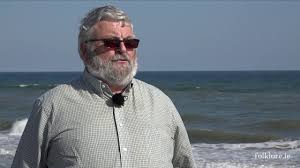
Seamus Brogan was born into a musical legacy which went back to his grandparents on both sides and was carried on by his parents. Seamus’ paternal grandfather (Jim Brogan) played the melodeon and was a keen singer, and his maternal grandmother (Mary Wilson) was a well-known melodeon player and singer, who played with a local céilí band that regularly played for “mummer’s balls” over a wide area of Co Wexford. Seamus’ mother (Mary Brogan) carried on the music and singing, eventually going on to win several singing and mouth organ All-Ireland competitions over the years, winning double in 1977.
As a teen, Seamus started to go to Comhaltas sessions across the country, meeting well established singers like Paddy Berry, and that was what hooked Seamus in. As a result Seamus has been singing and collecting ever since. Seamus’ achievements include winning the All-Ireland singing competition in Enniscorthy, receiving a Bardic award at Fleadh Cheoil na hEireann in 2010, and receiving a Gradam award at Fleadh Nua in Ennis in 2015. Seamus continues to deliver classes in singing across the globe, including the North American Comhaltas convention, and deliver master classes at the University of Limerick. Now residing in Co. Roscommon.
Carrig River
Style: Traditional, slow
About the song: Carrig River is an out and out Wexford town song. It was written by James “Messa” Nolan and James “Shaw”Mc Grath from the Hill St area of Wexford town in 1890.
Lyrics
Carrig River
As I roved out one evening in the pleasant month of May
It was down by Carrig River I carelessly did stray
The hawthorn and sweet briar they would your heart illume
And the rippling of the water when the fraughans were in bloom
I do remember long ago when together we did roam
Through the lovely dells of Carrig where the woodcock makes his home
Where all nature it seems smiling along each rocky side
And the silvery stream flows down between to join the Slaney tide
It’s oft times that with vain regrets we think of things we’ve seen
We have lived the past but can’t forget and mourn what might have been
As we strolled along, the sweet bird’s song was ringing in the sky
Oe’r the lonely graves of Carrig where our ‘98 men lie
We oft times go to view the place where our comrades they do lie
Where oft we joined in harmless sport in days now long gone by
Our hearts were young we knew no care as through the fields we strayed
But in vain that they have passed away where oft times we had played
The thoughts of you sweet Carrig are constant in my mind
I have roamed this wide world over your equal I can’t find
Your lofty trees and waterfalls it’s them I do adore
So fare thee well sweet Carrig adieu forever more
Background notes
Carrig River is an out and out Wexford town song. It was written by James “Messa” Nolan and James “Shaw”Mc Grath from the Hill St area of Wexford town in 1890.
Carrig Wood was a popular area for towns people to stroll to on a Sunday afternoon before the arrival of the motor car. This quiet and pleasant rural area is scarcely considered today, but its name is well revered by the older generation of Wexford towns people.
Pol and Nancy Hogan
Style: Traditional, lively
About the song: Paddy Berry collected this song from Edmund Hore, Coolamain, Oylegate Co Wexford in 1979. In an old recording of Mary O Hara’s, the compere of the day refers to it as a Wexford Mumming song but its origin has not been traced.
Lyrics
Pol and Nancy Hogan
Near Wexford town there is a place, a place called Ballybogan
And in that place there lived two maids called Pol and Nancy Hogan
With me tooriah fol dah diddle ah toor I fol dah diddle aero
Now Nancy bought a little pig and she hired Pol to mind it
And just like any other little pig it carried it’s tail behind it
With me tooriah fol dah diddle ah toor I fol dah diddle aero
Now Pol she bought another one and isn’t it a wonder
That in a week you wouldn’t know these two little pigs asunder
With me tooriah fol dah diddle ah toor I fol dah diddle aero
Two culeans walking by the road when the two little pigs were feedin
Pulled out their knives, cut off their tails and sent them home all bleedin
With me tooriah fol dah diddle ah toor I fol dah diddle aero
Now Nancy went to a court of law, before the judge and jury
And Pol steps up before the bench for to read out her story
Saying if your honour was a pig which I hope you’ll never be sir
If a blackguard came and cut off your tail wouldn’t you roar and bawl and squeal sir
With me tooriah fol dah diddle ah toor I fol dah diddle aero
The magistrate stood up and said their rumps will soon be mendin
And pigs will snore and fatten more without their tails attendin
With me tooriah fol dah diddle ah toor I fol dah diddle aero
These two old maidens Pol and Nan, they lived a life quite airy
And not a word was ever spoke but every word contrary
With me tooriah fol dah diddle ah toor I fol dah diddle aero
Now Nancy died on a Saturday night and Pol she died on Sunday
They waked the two on Sunday night and buried them both on Monday
With me tooriah fol dah diddle ah toor I fol dah diddle aero
Toori oori fol da diddle doori toori fol da diddle dayrio
Background notes
A humorous Wexford song, found in a few accounts in the Dúchas Schools Collection
Máire ní Bhaoill
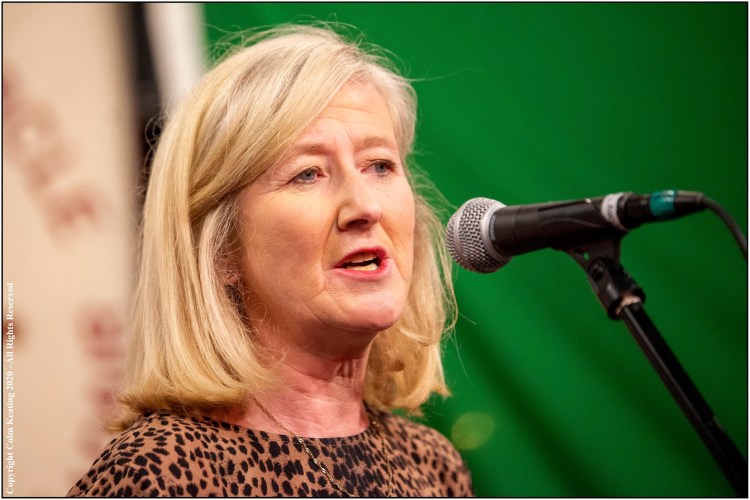
Máire Ní Bhaoill was a lecturer in Irish language education at DCU Institute of Education and is a former primary school teacher with many years’ classroom experience. She has a particular interest in the role of song, storytelling and oral tradition in language learning, encouraging teachers and children to experience Irish as a living, spoken and sung language. Through her work with schools across Ireland, including the Gaelbhratach programme, she promotes the use of traditional songs, rhymes and stories to build confidence and joy in Irish language learning. Photo: Colm Keating
The Rollicking Boys Around Tandragee
Style: Traditional, lively
About the song: Máire got this Armagh song from The Irish Song Tradition book by Seán O’ Boyle (Gilbert Dalton: Dublin, 1976).
Lyrics
The Rollicking Boys Around Tandragee
Good luck to all here now barring the cat
That sits in the corner there smelling a rat
O wheesht your philandering girls and behave
And saving your presence, I’ll chant you a stave
I come from the land where the pritties grow big
And the girls neat and handy can swirl in a jig
And the boys they would charm your heart for to see
Those raring fine fellows ‘round Tandragee.
Chorus
So here’s to the boys who are happy and gay
Singing and dancing and tearing away
Rollicks and frollicks, and frisky and free
With the rollicking boys around Tandragee
No doubt you have heard of Killarney I’m sure
And sweet Innishowen for a drop of the pure
Dublin’s the place for the strawberry beds
And Donnybrook Fair for the cracking of heads
Have you e’er seen an Irishman dancing palltog
How he faces his partner and turns up his brogue
He shakes at the buckle and bends at the knee
They’re wonderful dancers in Tandragee.
Chorus
Now the oul jaunting car is an elegant joult
And Derry’s a place that is famed for a hoult
Among the green bushes that grow in Tyrone
And the County Fermanagh for muscle and bone
But for feasting and dancing and fun at the fair
Sure there’s no one can match with the Rakes of Kildare
Green Erin’s my country, the gem of the sea
But the gem of oul Ireland is Tandragee.
Chorus
O where is the man, either Christian or Turk
Could equal the bold Robert Emmett or Burke
O where is the lawyer can speak up like Dan
The devil another, bad luck to the one
And where is the singer can sing like Tom Moore
Whose melodies charm all dull care from your door
But we’ll beat them all yet boys, and that you will see
For we’re raring fine fellows round Tandragee.
Chorus
Background notes
“The Rollicking Boys of Tandragee” is a traditional Irish jig and accompanying song originating from the town of Tandragee in County Armagh, Northern Ireland. Often associated with jaunty melodies, it is linked to the Scottish tune “The Hills of Glenorchy” (1822) and was popularised by singer Paddy Tunney.
Moorlough Mary
Style: Traditional, slow
About the song: Máire got this song from Paddy Tunney, who was a good friend of her Dad’s.
Lyrics
Moorlough Mary
The first time I saw my young Moorlough Mary
‘T was at the market of sweet Strabane,
Her smiling countenance was so engaging
The hearts of young men she did trepan;
Her killing glances bereft my senses
Of peace and comfort by night and day
In my silent slumber I start with wonder –
Oh Moorlough Mary, will you come away?
To see this darling on a summer’s morning
When Flora’s fragrance bedecks the lawn,
Her neat deportment and manners courteous
Around her sporting the lamb and fawn;
On her I ponder where ere I wander
And still grow fonder, sweet maid, of thee,
By thy matchless charms I am enamoured
Oh, Moorlough Mary, will you come away?
On Moorlough’s banks I will ever wander
Where heifers graze on a pleasant soil,
With lambkins sporting, fair maids resorting,
The timorous hare and blue heather bell;
I’ll press my cheese while my wool’s a teasing
My ewes I’ll milk at the peep of day
When the whirling Moorcock and lark alarms me
From Moorlough banks I’ll never stray.
Were I a man of great education
And Ireland’s nation at my command,
I’d lay my hand on your snowy shoulder
In wedlock’s portion, I’d take your hand
I’d entertain you both night and morning
With robes I’d deck you both bright and gay
And with jewels rare, love, I would adorn you,
Oh, Moorlough Mary will you come away?
Background notes
In Songs of the People, Sam Henry credited Moorlough Mary to James Devine of Loughash, Donemana, Co. Tyrone, c. 1876. The song spread all over the north of Ireland on Ballad Sheets and was sung to various tunes. For further info It was one of the very first songs that Máire sang in the Fleadh in the late 70s
Johnny Johnston & Declan Coyne
Declan Coyne and Johnny Jonhston are two great custodians of traditional song in the Galway/Roscommon area. Declan set up the South Roscommon Singers Circle more than 30 years ago and Johnny, who is also in Ballinasloe Singers Circle, has been part of this Circle since its infancy.
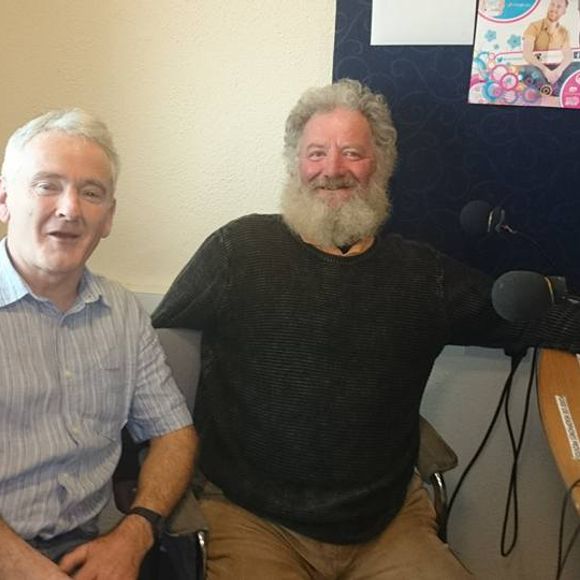
The following text and recordings are from Roscommon Singers CD and Book “Alone by the Wild Wood” produced, edited and mastered by Declan Coyne. All arrangements by Pauline Hanly, Johnny Johnston, Declan Coyne and Patsy Hanly. Permission to share here granted.
Old Ballymoe
Style: Traditional, lively
About the song: ‘Old Ballymoe’ is probably not the best Roscommon song ever written, but it is certainly one of the most popular – “Alone by The Wild Wood”
Lyrics
Old Ballymoe.
In the County Roscommon in hail stones and rain
I was crossing the fields on my way to the train
I met a colleen and says she, “do you know
The shortest short cut into old Ballymoe?”
Says I, “colleen óg, who led you astray?
I think I’ll go with you and show you the way”
Says she, “I’m afraid because you I don’t know
You might kiss me between here and old Ballymoe.”
Says I, “colleen óg, I’ve seldom been kissed”
Says she, “you poor lad, sure a lot you have missed”
Says I, “I am willing to learn you know,
We can practise between here and old Ballymoe.”
“Do you think I’d walk with you, you Mullingar rogue?
I don’t like your looks or your smooth ringing brogue
You’re young and you’re handsome but dear knows you’re slow
And we don’t like a dead one in old Ballymoe.”
Says I, “I’ve been noted for strength and for looks,
And my brains’ not so bad for I’ve mastered the books
So if you say yes, to be married we’ll go
And forever be happy in old Ballymoe.”
She started to laugh ‘till I thought she would choke
She says, you poor cluasán I will tell you a joke
Step out of my way, sir, for now I must go
I’ve a husband and six kids in old Ballymoe.”
In the County Roscommon in hail stones or rain
If you’re crossing the fields on your way to the train.
Beware of the colleen that you do not know
She might just be married in Old Ballymoe!”
Background notes
‘Old Ballymoe’ is probably not the best Roscommon song ever written, but it is certainly one of the most popular. Information on its origin is practically non existent, but it is generally accepted that it may have been composed by a passing stranger – perhaps a rail commuter, as some of the references reveal a lack of local knowledge. Suffice to say, it was hardly written by a Galwegian! There are some contradictions too in the storyline and, to confuse matters even further, in parts of Leinster and Munster the song is often referred to as ‘The Mullingar Rogue’. Could that Mullingar Rogue be the author?
Meanwhile, some versions I have seen make no reference to the ‘Mullingar rogue’ at all. My hunch is that the song may well have been written by the McNulty’s, who recorded it in New York, on 2nd April 1940, or is there a record of its existence prior to that date?
‘Old Ballymoe’ was a great favourite of the late Johnny Mulry in Rahara, and these days Peggy McMahon from west Clare often sings it at sessions – especially when there are a few Roscommon fellows in the company. She also has it on her CD ‘The Parting Way of Time’. Brendan Shine also recorded it in the 1970’s. “Alone by the Wild Wood”
UPDATE FROM DECLAN COYNE – It’s a Peter McNulty (of the McNulty Family) adoptation of a mid 1800s local ballad, ‘Ballinasloe’, which is a not so complimentary account of a man’s encounter with a patient from the, then new, psychiatric hospital in Ballinasloe. The air is also possibly Pete’s adaptation of an American air, ‘Sweet Betsy from Pike’. Here are the original lyrics:
Ballinasloe
In the county Roscommon in sunshine and rain,
My pockets were empty, my stomach the same,
I met a colleen and says she, “Do you know
The shortest short cut into Ballinasloe?
Says I, “Colleen óg who led you astray?
I think I’ll walk with you and show you the way.”
Says she, “I’m afraid because you I don’t know.
You might kiss me between here and Ballinasloe.”
Says I, “Colleen óg, I’ve seldom been kissed.”
Says she, “You poor cod there’s a lot you have missed.”
Says I, “I am willing to learn, you know.
We could practice between here and Ballinasloe.”
“So you’d like for to practice on me you red rogue,
I don’t like your looks or your sootherin’ brogue.
You’re young and you’re handsome, but God knows you’re slow,
And they don’t like a dead one in Ballinasloe.”
She started to laugh ‘till I thought she would choke.
Said she, “You poor cloosey, I’ll tell you a joke.
I’ll give you one smathogue, but then I must go,
I’ve a husband and six kids in Ballinasloe.”
The roads they were long and the roads they were narrow.
I loaded this cuckoo into a wheel-barrow.
The wheel-barrow broke and she stubbed her big toe,
So, I carried her home into Ballinasloe.
Pauline Hanly
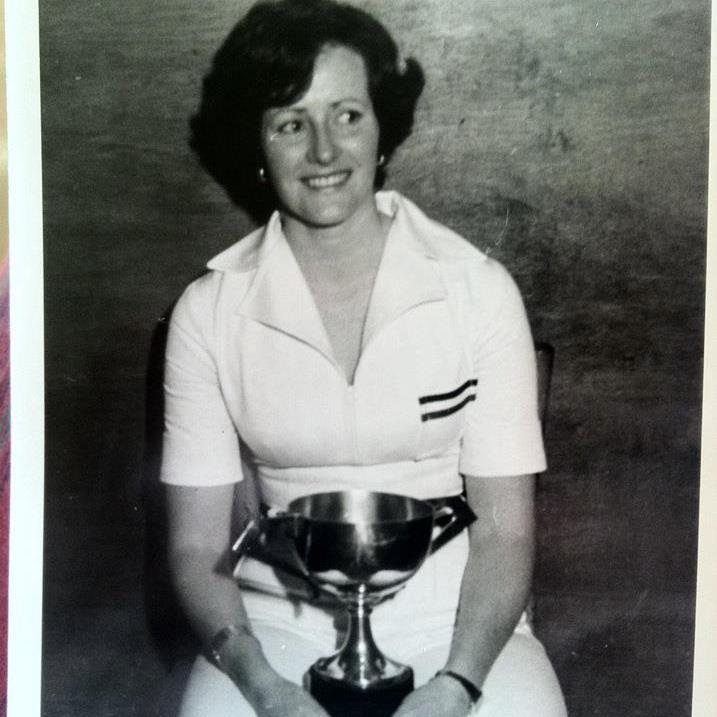
Pauline Hanly (née Sweeney) was a renowned traditional singer, originally from Donegal, who made her home in County Roscommon following her marriage to flautist Patsy Hanly in the early 1970s. Deeply respected within the traditional music community, she was an All-Ireland champion singer, winning three consecutive titles from 1978 to 1980. Known as “the voice of Donegal and the soul of seán nós,” Pauline was celebrated for her unique style of traditional singing and her deep commitment to the story within each song. A generous mentor and much-loved figure, her influence continues to resonate in the singers she inspired and the tradition she so beautifully carried.
The Boatman of Lough Key
Style: Traditional, slow
About the song: Written by a great songmaker and musician from Coolmine, Co. Sligo – Josie McDermott.
Lyrics
The Boatman of Lough Key
In a cold and silent churchyard in a place called Ballindoon,
There sleeps a famous boatman in a cold and silent tomb,
He is missed by all his many friends at home and overseas
And he is missed by all the children, the boatman of Lough Key.
On many a summer evening and Sunday afternoon,
Jim Flynn he sailed his pleasure boat along the shores of Doon,
Where crowds of tourists in line appear all anxious for to see
The many lovely islands in the waters of Lough Key.
They proudly step on board with Jim and feel no hurt or harm,
They knew he was a sailor bold and weathered many a storm,
He’d take them round the islands and McDermott’s Castle too
And he’d tell them all the legends as only he could do.
Next came the shores of Rockingham and its lovely trees and lawns,
He’d tell the tragic story of the charming Úna Bhán,
And take them to her resting place where she sleeps beneath the clay
Where the wild birds sing in requiem until the judgement day.
Jim was a great historian, his likes was hard to find,
When asked for his opinion he’d quickly speak his mind.
It was good to hear him tell the tales of Ireland long ago,
That he heard from all the old folk around his native Carrigeenroe.
Now the summer sun it shines once more and the tourists line the shore,
Their little boats swim over the waves, but Jim he is no more.
The angels came and called him home for all eternity,
For the Lord has found a better place for the boatman of Lough Key.
Background notes
Josie McDermott was born in 1925 and lived all of his life in Coolmine, a townland in Co. Sligo just outside the town of Ballyfarnan, Co. Roscommon. The blind harper Turlough O’Carolan is buried nearby. Josie was taught to play music by a local fiddler James Flynn, though his own preference was for wind instruments – whistle, flute, saxophone and trumpet. While traditional music was his first love, his interests were much broader than that, encompassing country, jazz and classical. He played in contemporary dance bands as well as céilí bands in his younger days.
Josie was also a prolific composer of airs and ballads – ‘Trip to Birmingham’ and ‘Darby’s Farewell to London’ are among his best-known reels, while ‘Lasser’s Holy Well’ and ‘The Boatman of Lough Key’ are probably his best known ballads.
In 1962 Josie contracted severe eczema and lost his eyesight as a result. Undeterred, he continued to play, winning All-Irelands on Whistle and Miscellaneous Instrument (saxophone) in 1964. He subsequently achieved similar success in Flute, Lilting and Ballad competitions and went on to write some plays in his time. Josie McDermott died in 1992.
I believe the song was written for a competition in relation to some tourism project in North Roscommon, thus the reference, ‘the tourists line the shore’, which secured 1st prize for the more than capable composer. But, more importantly, the song was written in memory of Josie’s friend, Jim Flynn, and like all good ballads, it tells its own story.
Ciarán Cunningham from Roscommon town recorded this on the South Roscommon Singers Circle’s first CD, ‘What Will We Do?’ – “Alone by the Wild Wood”
Fionnuala Maxwell
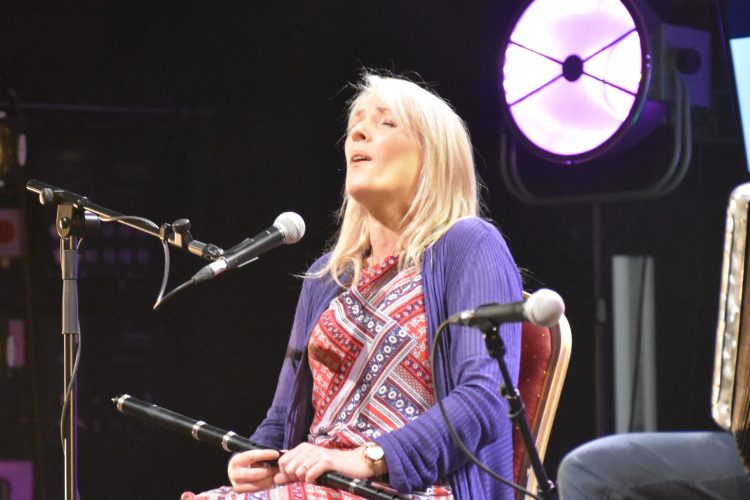
Fionnuala Maxwell is a traditional singer, musician and folklorist from County Leitrim who is deeply involved in researching and sharing the songs, stories and musical traditions of her region. Through performances, workshops and community projects, she works with people of all ages to explore local heritage and keep traditional song and folklore alive.
Ould Paddy McCarthy
Style: Traditional, lively
About the song: Told by Mrs Hunt (aged 84) Jamestown to Mary Gorman (pupil)” – Dúchas School’s Collection (late 1930s)
Lyrics
Ould Paddy McCarthy
On the edge of a bog, on a splendid estate
With acres of rushes outside his grand gate
And the turf grew spontaneous – in Winter, – to hate
The shins of ould Paddy McCarthy.
Chorus
Right fol-the dol-oll the doll – oll oll-the doll-dee
Right fol-the dol-oll the doll – oll oll-the doll-dee
Right fol-the dol-oll the doll dee –
To hate the auld shins of McCarthy.
The children along with the pigs used to play
For Paddy loved bacon, ’twas always his way
He would not give a farthin’ for coffee or tay
The “dhrop” was the stuff for McCarthy.
Chorus
Right fol, the doll, oll the doll, oll the doll ee 3 times
Line 4. The dhrop was the stuff for McCarthy.
A jar of poteen was laid on the shelf
Along with the noggins and other ould delph
And whenever he drank, he drank to himself
“Here’s a health to ould Paddy McCarthy”
Chorus 3 lines as before
Line 4. “Here’s a health to ould Paddy Mc Carthy”
On a fine Summer’s day it was always his plan
To stretch himself outside the ditch like a man
But the flies were the ‘dickens,’ they always began
to bite the ould nose off McCarthy
Chorus 3 lines as before
Line 4. To bite the ould nose off McCarthy.
An’ when he’d go out, to a market or fair
His big brawny chest was exposed to the air.
Sorra cravat he ever could wear.
‘Twould smother ould Paddy McCarthy.
Chorus 3 lines as before
Line 4. ‘Twould smother ould Paddy McCarthy.
One night at a wake he got drunk as a beast
And who should he meet but his own Parish Priest
“Well Paddy,” says he “you’ll be damned now at least”
“I’ll be damned, if I will”, says Mc Carthy
Chorus: 3 lines as before and repeat
“I’ll be damned if I will”, says McCarthy
Background notes
This song appeared in the Dúchas Schools Collection when schoolchildren from around the country were tasked with asking the older members of their area about their childhoods, their memories, poems, stories, games they played, etc. Mary Gorman was a student in Jamestown, Co. Leitrim at the time (late 1930s) and she received this song from a woman called Mrs Hunt who was aged 84 at the time and who told her that her grandfather, John Hunt, from Portanaght in Carrick on Shannon used to sing it – so it dates back very far!
The Pride of Dromod Town
Style: Traditional, lively
About the song: Composed by Tom Newton & Teresa Faughnan of Cloonturk School, Co. Leitrim in the 30s. Compiled from Dúchas Schools Collection
Lyrics
THE PRIDE OF DROMOD TOWN
Here comes Peter Morahan
The pride of Dromod town
And if you call to see him
He is sure to stand a round.
CHORUS: Fill ‘em up, fill ‘em up
Fill ‘em up ‘round Dromod Town.
If e’er you’re feeling tipsy
Or perhaps you’re feeling slack
A glass of special whiskey
you can have from Mary Mac. CHORUS
If ever you are tired
Or perhaps you want a car
You will find accommodation
At Mc Kiernan’s whiskey bar. CHORUS
If a pair of boots you’re wanting
I will tell you where to go
For all the finest quality
is sold by Annie Crow. CHORUS
She sells tea and snuff, tobacco
And has everything you need.
For all her finest quality
Is safely guaranteed. CHORUS
If you require a blacksmith
Just call down the Shannon lane.
Or if you want to go abroad
You can get the Midland train. CHORUS
And if you want a motor car
On Diffley you can call
Or visit the Post Office
Miss McGlynn will serve you all. CHORUS
Ah, Dromod is a lovely spot
Down by the Shannon shore.
You’ll have to write a verse yourself
If you want any more. CHORUS
Background notes
Dromod is a small village in County Leitrim, bordering Longford. It is served well by the main N4, the Shannon river and the Sligo-Dublin train. This song recollects a time when there were many more shops, boarding houses and pubs in it than there are now – although it’s still a pretty famous spot for food, boasting three restaurants, a café and takeaway as well as the Cavan-Leitrim Narrow Gauge Railway museum.
Mary óg Mo Chroí
Style: Traditional, slow
About the song: Composed by Michael Rogers ex. N.T. late of Callow National School, Co. Roscommon.
Lyrics
MARY ÓG MO CHROÍ
Dear Erin’s heath-clad mountains are beautiful to view,
Likewise her hills and fountains and lakes of rolling blue.
But on these hills and sparkling mills there are no joys for me
Since You beneath the clay now sleep young Mary óg mo chroí.
And fond memory brings me back the hours when over the mountains wild,
I wandered through those perfumed bowers with Mary young and mild.
And when beneath those shady trees we sat down silently,
Or listening to the blustering breeze with Mary óg mo chroí.
Her cheeks were like the rose so red, upon the mountain side.
Her neck was like the foam that flows, down by Lough Gara’s tide.
Her eyes shone like two diamonds most beautiful to see
And my hearts delight, both day and night was Mary óg mo chroí.
In Callow’s lone and shady Groves, some comely maidens dwell
But she the queen of perfumed flowers from the Callow maidens fell.
No more the summer sun will shine on our meadows cheerily,
Since You beneath the clay now sleep young Mary óg mo chroí.
No more in Callows shady bowers gladsomely shall we stray.
No more in Callows shady bowers will we while the hours away.
No more we’ll meet on Frenchpark Street or view its verdant lea
For beneath the clay in Clooneshamble lawn sleeps Mary óg mo chroí.
Background notes
This is a song composed by Michael Rogers ex. N.T. late of Callow National School. He died in the 1920s and was then about 85 years of age. He was replaced in Callow School by Mr. M. Rogers. These verses were written on the occasion of the death of a school-mate of his so a lament for Mary óg.
Further Online Resources

A fabulous compilation of sean-nós songs – with video recordings of various singers, accompanied by lyrics. Click on image to access.
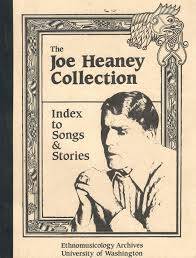
A really beautiful collection of stories, explanations and both Irish language, sean nós songs and English traditional songs from Seosamh Ó hÉanaí or Joe Heaney – a master of the tradition from Connemara who also brought his songs and folklore to various places around the world. Click on image to access.
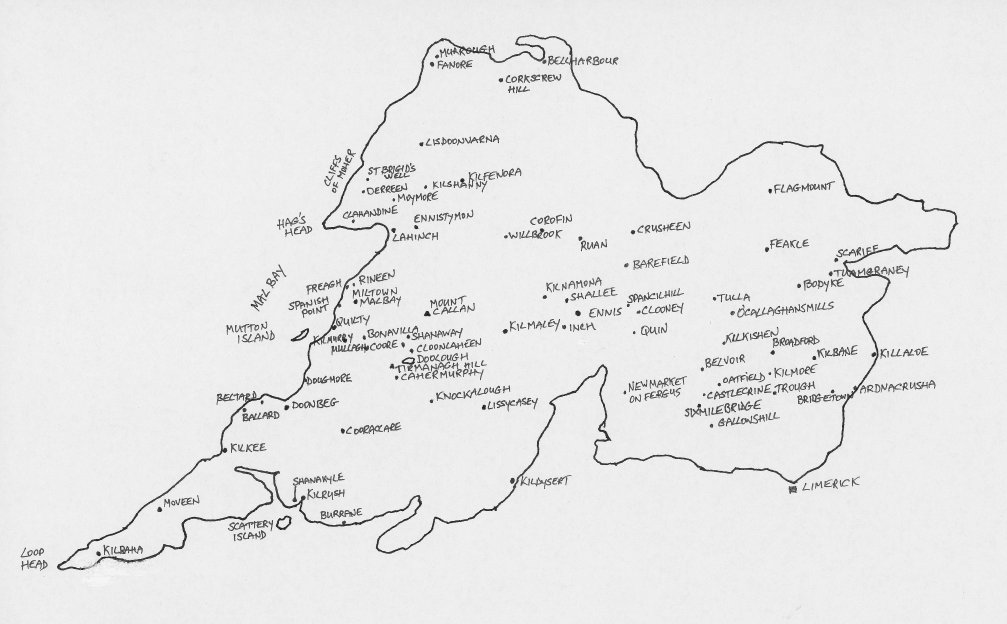
Clare County Library has a great collection of digitised songs called “Singers and Songs of County Clare” from the Carroll Mackenzie Collection – with lyrics and explanations too. Click on the image to access.
There are plenty of other places to find suitable traditional and sean nós songs – Comhaltas archives, local libraries and the Irish Traditional Music Archives but the really great place to pick up songs and develop style and confidence is at the numerous singing sessions that are happening all around the country. This type of singing began as an oral tradition and brought people together – to experience this in person is the best way to find your own unique style and understand what the songs are about.
This project was compiled and curated by traditional singer, Fionnuala Maxwell, supported by Comhaltas Ceoltóirī Éireann and aims to build on the good work already done and being done by various traditional and sean nós singers, collectors and teachers in Ireland and abroad. It follows on from the Comhaltas publication in 2018 of “Ag Múineadh na hAmhránaoíchta Traidisiúnta” which can be downloaded from the Comhaltas website. A huge thank you to all the singers who participated and sent recordings, lyrics and notes – and passed on their songs, so the next generation can learn from them.

 Fionnuala Maxwell